Finding His Voice: Todd Kreisman's Journey from Comedy to Canvas
In his son's bedroom in Wake Forest, just inside Franklin County, a 360-degree mural from Disney's Coco glows under black lights. Skeletal musicians and marigold petals shimmer in the darkness. It's a testament to both Todd Kreisman's devotion as a father and his rekindled passion for painting, an intersection of family, humor, and artistic ambition that defines his evolving creative journey. It was also the piece that inspired a new career. Kreisman's path to professional artistry wasn't linear. With a background in stand-up and sketch comedy, he brings an irreverent sensibility to the canvas that sets him apart in the North Carolina art scene. That comedic sensibility isn't just background noise. It's become the compass guiding his artistic evolution.
Before Kreisman found his way to the canvas, he chased a different kind of spotlight. "I come from a very artistic family. Not just the visual arts, but I've got singers, actors, writers, my family. Just was always very big on creating in any form," he recalls. Growing up in Chicago in that culture of art, he explains, "just inspires you to create, too." Art was a hobby in those early years, with young Kreisman filling sketchbooks with Disney-inspired drawings and animations. "When I was younger, when I was in high school, art was just a hobby for me. I did a lot of drawing. I loved Disney. I did a lot of animations and things like that," he says. He never took formal classes but constantly created. "The earliest thing I wanted to do was be a writer. Then I started to get the acting bug in high school," Kreisman explains. He enrolled in college as an acting major with a writing minor, and after graduation, spent a couple of years trying to break through in Chicago's theater scene. "But I really wanted to do films," he says. At 22, Kreisman made the pilgrimage west, moving to LA to "do the Hollywood thing". For 17 or 18 years, he worked the circuit. "I did stand-up, did sketch comedy. I did some minor commercials, did a couple TV pilots, but nothing that grabbed hold," he recounts. One of those pilots was for TV Land, which was attempting to transition from showing classic reruns to producing original content.
The project was co-created by Steve Little, who would later appear on HBO's "Eastbound & Down". Despite the talent and the hustle, something held him back. "I also discovered that I just had intense audition fright," he admits. That anxiety became an insurmountable barrier. "Eventually I decided it wasn't worth the anxiety," he says. The realization led to a crucial pivot. "I wanted to still be creative, but do things where I could be in a room by myself being creative," he explains. It's a sentiment many artists understand: the desire to create without the constant performance. Los Angeles had given him nearly two decades but when he and his wife had their son in 2018, they began questioning whether it was where they wanted to raise a family. "Between cost of living and the air quality from the wildfires and everything else, we just decided maybe we wanted to try being somewhere else," Kreisman says. Without jobs lined up, they did their research and decided on North Carolina. "We looked at Cary originally when we came out, but our realtor kind of pushed us up this way and glad he did," he adds. They arrived right at the beginning of the pandemic, a new beginning in every sense.
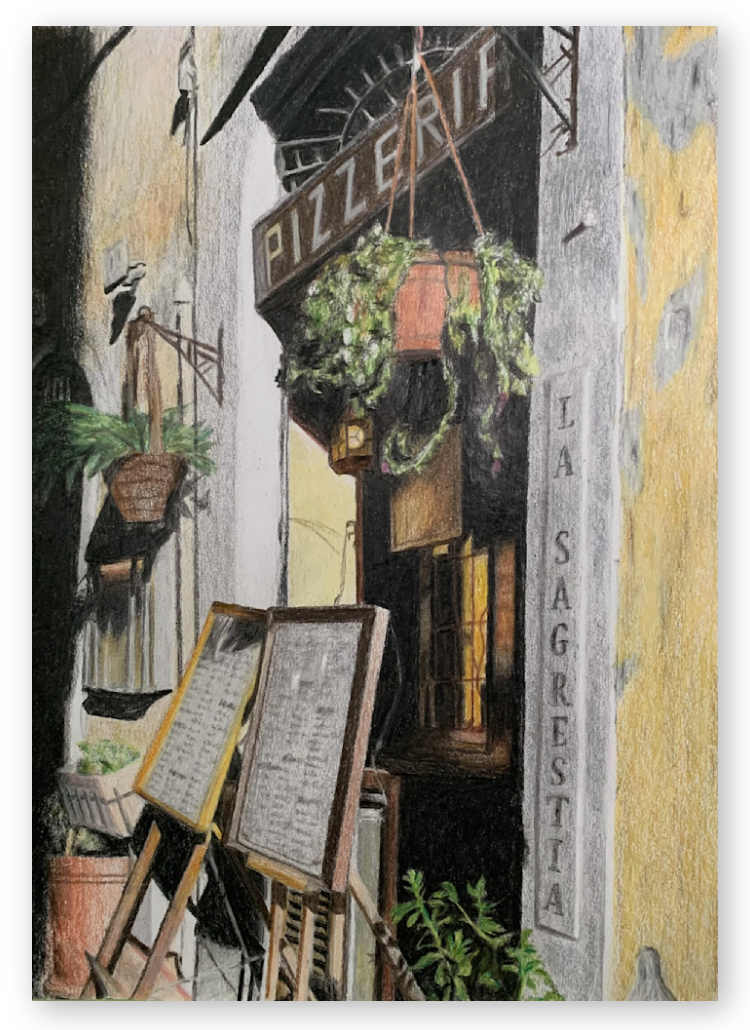
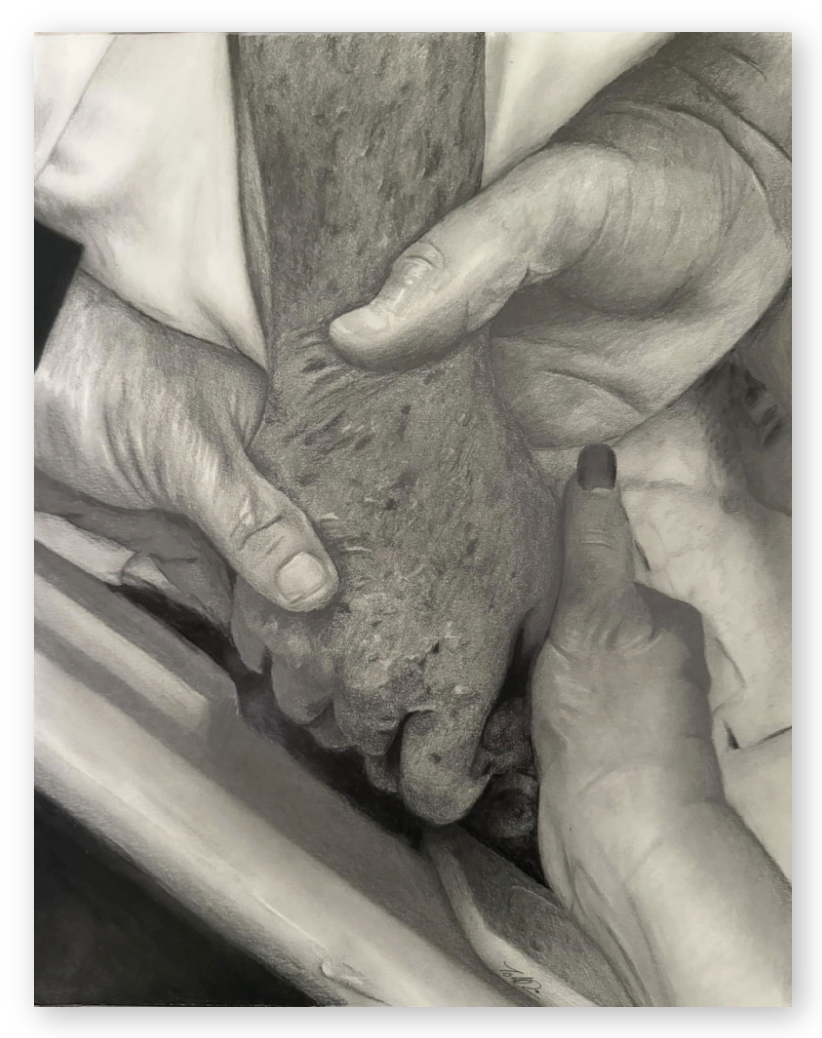
The Coco mural wasn't just a bedroom makeover; it was a turning point. "I wanted to do something really special for his bedroom," Kreisman explains. The project, executed entirely in black light paint, rekindled something dormant within him. What followed was a prolific outpouring of creativity, all channelled through his son's imagination. He created a series of 8x10 paintings for every show, movie, or book that captured his child's attention. Their playroom at home became lined with these small tributes to wonder, visual love letters to a boy's expanding universe. "Every time he got into something new, I would do a little painting for him. He would get so excited to see what the next one was going to be," Kreisman recalls. The ritual became as much about the shared anticipation as the finished product. But Kreisman didn't want to merely dabble. "That's kind of how I've been with everything. I don't even if something's a hobby, I want to perfect it as much as I can," he says. He signed up for online classes in acrylic painting and graphite drawing, then expanded his knowledge to include oil and colored pencil techniques. His approach was methodical, almost obsessive: "I was just kind of rabidly attacking all of those videos that I could find in classes. I started following a ton of artists. And anytime a reel would come up where they would be going into their technique or their craft, I just paid attention to it. I didn't just want to see the pretty art. I wanted to know how they got there".
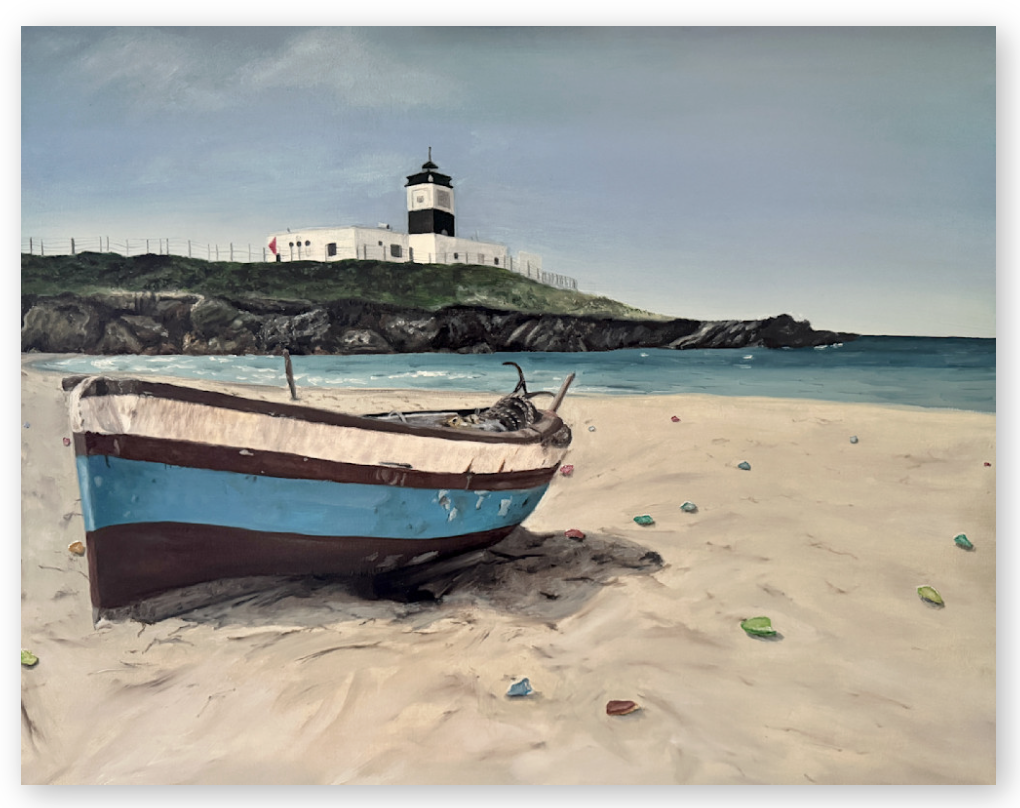
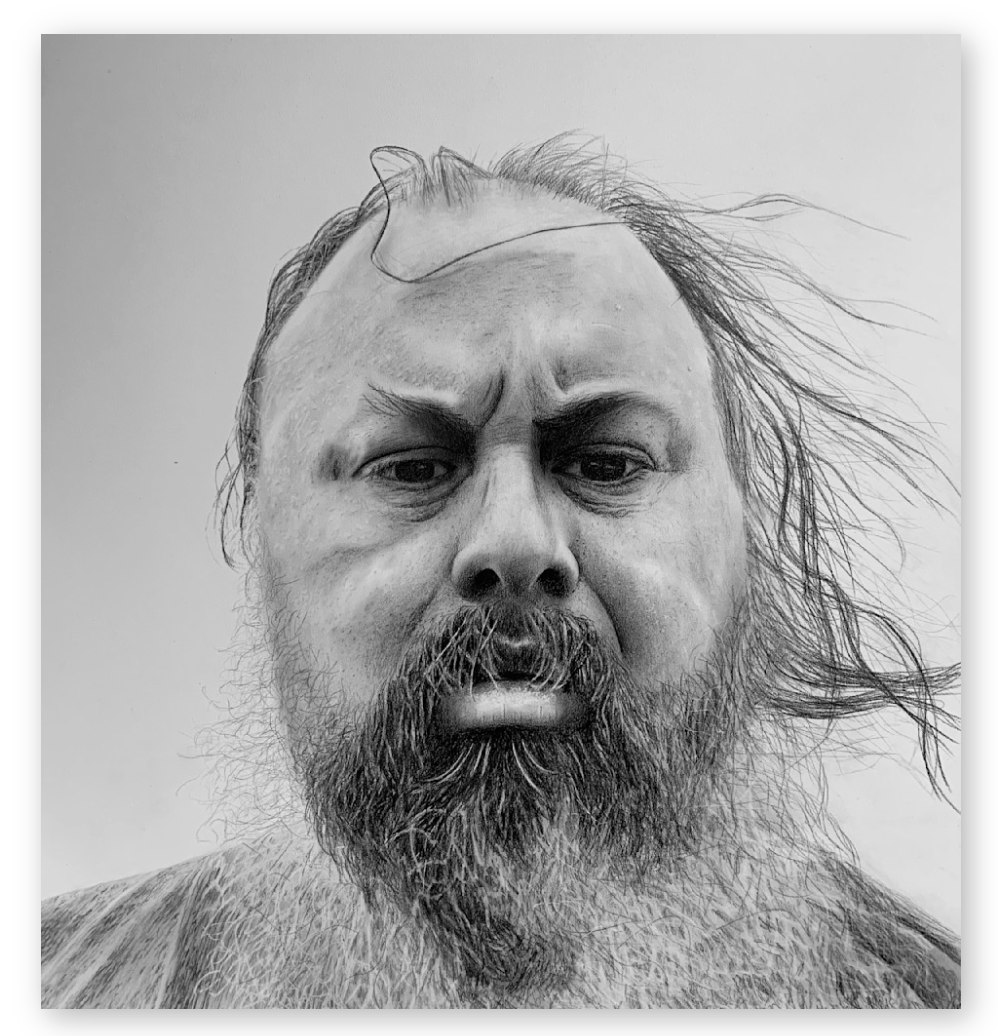
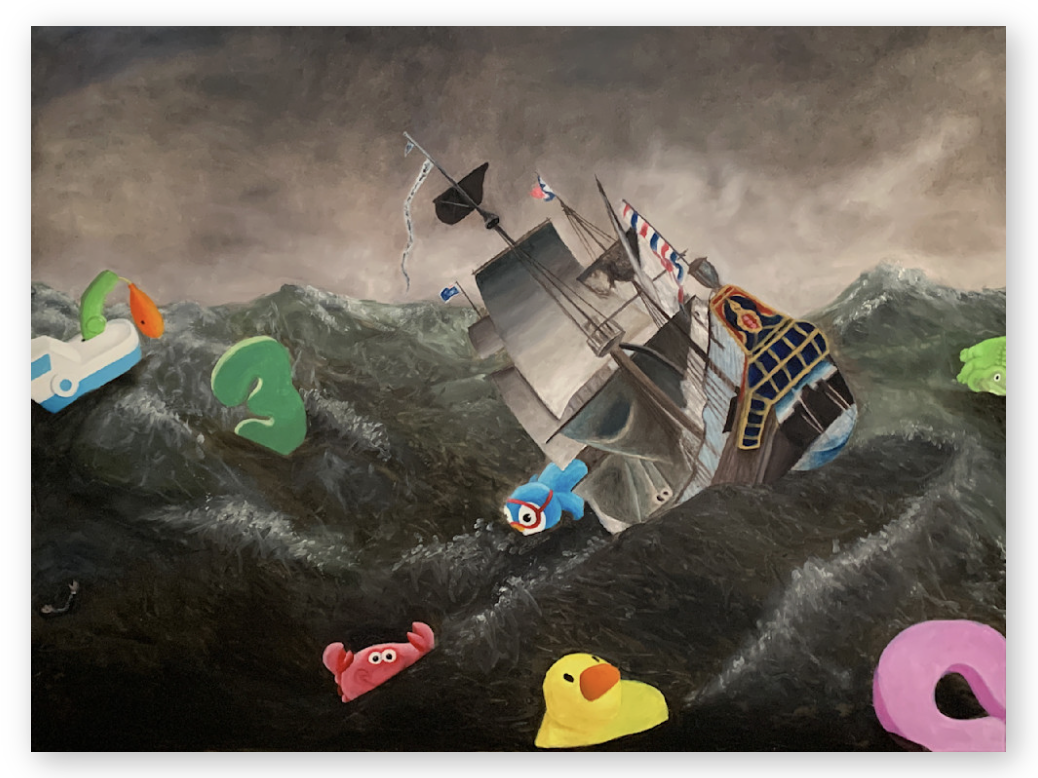
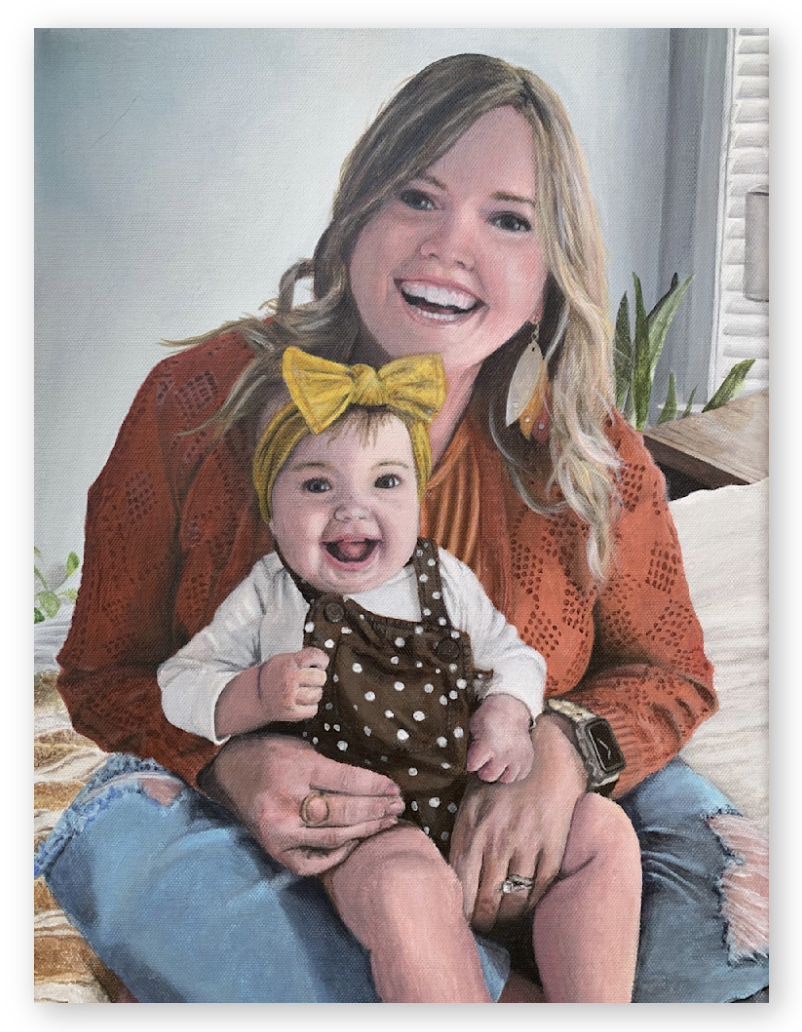
That dedication to craft shows in his work. His most prized piece (a graphite drawing that consumed 35 hours) depicts a friend skiing at a mountain summit, hair flowing, looking like "somebody that might have crawled out of a cave." It represents what he considers "the most realistic human portrait that I've done". The technical achievement matters to Kreisman, who finds particular satisfaction in portraiture's unique challenges. His son continues to inspire Kreisman's most conceptual work. He's developing a series depicting the world through a child's imagination. "Bath Time," a large oil painting, shows a ship tossed in a storm at sea, but surrounding the vessel are bath toys popping up from the ocean. Another work-in-progress captures his son leaping off a bed wearing Buzz Lightyear wings, arms stretched as he soars not into a bedroom but into the Grand Canyon. "It's just like in his imagination, you know, where's he going?" Kreisman muses. Currently, about 90% of his commission work consists of pet and family portraits. Recent commissions have offered welcome variety: an abandoned boat on a beach with a lighthouse, Asian-themed work from a client's travels, departures from the steady stream of beloved pets and family groupings. He's also ventured into murals, though breaking into that world has proven challenging. "It's really hard. I've tried to get some mural work, and if you haven't done any public outdoor murals, to get considered because there are so many good muralists out there," he notes. Still, he's completed private commissions (a pickleball facility's logos, bedroom murals) and hopes to expand in that direction.
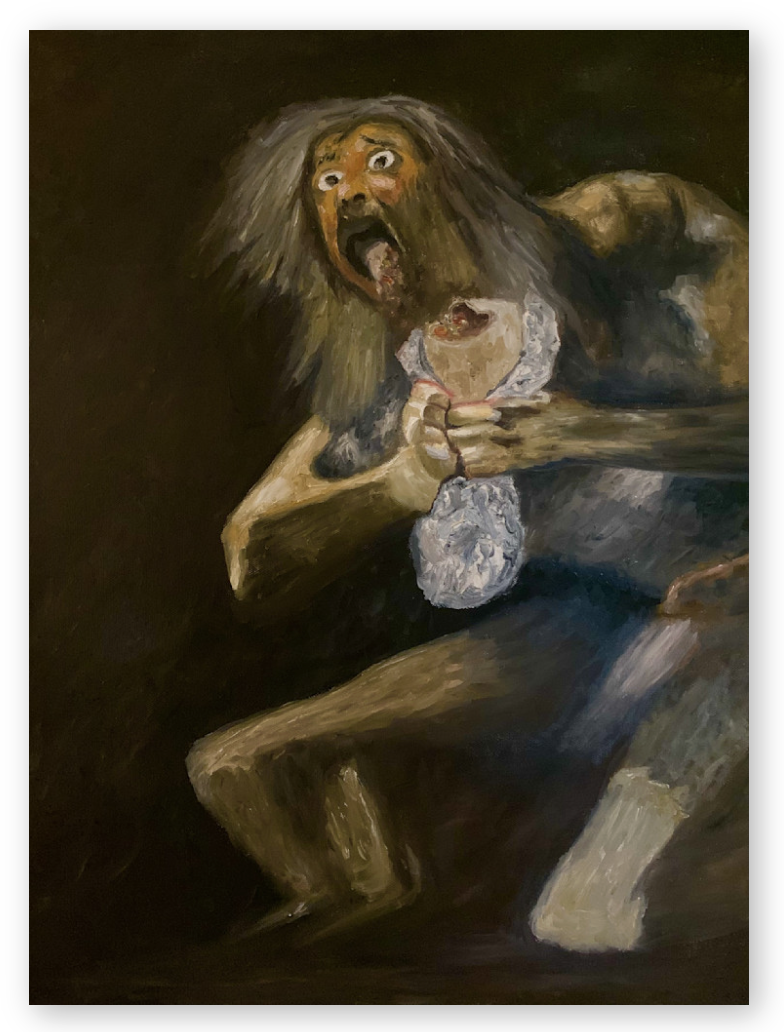
Kreisman is also teaching. He's conducting a six-hour realistic drawing workshop at Pullen Arts Center in June and he’s working with Franklin County Public Libraries to teach a series of classes in Franklin County. His approach to teaching mirrors his own learning style: technical, detail-oriented, generous. When his son wanted to create a Spider-Man drawing for his school art show, father and son sat together for half an hour each evening for a week. Kreisman would draw his Spider-Man while his son drew alongside him, learning about blending and shading. "None of his friends believed that he did it. He was so proud," Kreisman laughs. Yet like many artists, Kreisman wrestles with finding his signature style. "These artists that I follow, they very rarely have similar techniques. I really love a wide variety of art. And that is mirrored, I think, in my own art, which is kind of a problem," he admits. "If you really look at any successful artist, they've got their own style.” But he's made strides. He references a Picasso quote that he loves: "It took me four years to paint like Raphael, but a lifetime to paint like a child." “And that's kind of been my journey". "I really was fascinated by photorealistic stuff. And so those were the classes I took and the tutorials I watched. I was on a path to try to create as realistically as I can," he explains. But as his skills improved, something shifted. "I don't know if I really understood or appreciated things that were done a little more loosely. But as I've improved my skills, that's what's been drawing me in more," he says. Kreisman has found his north star, though. It comes back to that comedy background, that instinct to entertain and surprise. "I feel like my pieces need to incorporate humor. Because that's my background. I did stand up, did sketch, I'm just a huge comedy buff. And I just enjoy doing something that might impress somebody with the technique, but is also going to amuse," he says. He acknowledges the challenge: "Humor and art don't typically jive, but I feel like I need to find a way to make them fit.”
For those considering the artistic path, Kreisman offers hard-won wisdom born from his own struggles navigating creative careers. His advice is pointed and practical, rooted in what he wishes someone had told him years ago. If his son decided to make a living as an artist, Kreisman says he would "obviously fully support that," but with one crucial caveat: "When you go to school for it, double major in art and business". It's advice that comes from experience. "A lot of people, myself included, who want to do creative stuff shut off that part of their brain that wants to admit that this is real life as well," he explains. The reality is unforgiving: artists must market themselves, promote their work, and understand how to sell, skills rarely taught in traditional art education. The lesson crystallized for Kreisman during his theater days. "What's interesting, and what I noticed after college was that the people in our program who never got the leads, who really had to scrap and struggle to get into shows, were the ones having success because they had learned that skill," he reflects. "And the people who kind of had things handed to them where things came easily got into the real world and realized that it's a little tougher. Our egos took a hit and it was hard to push forward," he continues. Without business knowledge and "a clear vision of reality presented to us," even talented artists struggle. "That's something that upset me most about my college experience, that we spent so much time learning the craft of acting and very, very little about what would actually happen once you got out there," he says. "You want to find a niche audience for what you have. Again, it helps if your stuff is branded in a particular way or you have specific style or subject. But you want to find buyers that are going to be passionate about what you do. Not just people who like art in general. That's too broad," he insists. If you paint golf courses, join every golf subreddit and Facebook group, advertise in golf course lobbies, get to know golfers. "Really find out where your audience is and hit them".
It's an approach that's distinctly his own: technically rigorous but conceptually playful, devoted but never precious. In the glow of those black lights in his son's bedroom, surrounded by skeletal musicians and blooming marigolds, you can see the synthesis: craft in service of wonder, skill deployed to create joy. Those years in Los Angeles weren't wasted. The stand-up stages, the audition rooms, the sketch comedy collaborations, they all fed into who Kreisman is as an artist today. He learned to perform, to find the hook, to understand what makes people lean in. Now he applies those lessons to canvas instead of camera, trading audition anxiety for the quiet satisfaction of a brushstroke that lands exactly right. In a career defined by passion over profit, by creative exploration, Kreisman has found something valuable: a voice that's unmistakably his own.
You can find Kreisman's work on his website at toddkreismanart.com and follow him on Instagram.