Fiber Becomes a Story: the Art, Sustainability and Craft of Two Dachshund Farm
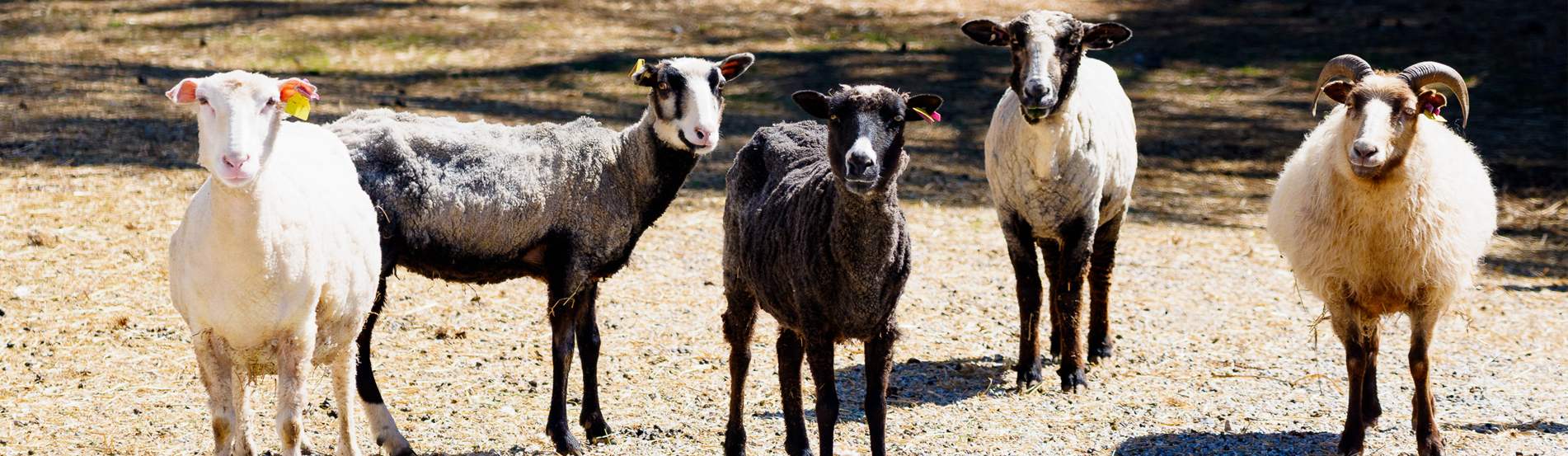
Driving just beyond Franklinton High School, you’ll find a place in Franklin County that feels both carefully made and entirely effortless. Two Dachshund Farm does not announce itself with large signage or spectacle. It reveals itself slowly, through a gravel drive that curves just enough to obscure what comes next, through the soft punctuation of animals in the distance, through the faint suggestion of lavender carried on the air.
What strikes you first is not the animals, though they are everywhere. It is the feeling that this place operates according to a different logic. Nothing here seems rushed. Nothing feels wasted. Every part of the farm appears to be in conversation with something else: from animal to land, land to craft, and craft to memory.
As Anne Akers, co-owner with her husband Rodney Akers, puts it simply, “It is art in itself.”
Two Dachshund Farm began, as many stories do, with a return.
After years spent elsewhere, through graduate school, early careers, and the long middle stretch of raising a family, Anne and Rodney made their way back to North Carolina and chose to settle in Franklin County in 2015. The decision was not framed as a grand reinvention. It was quieter than that. A recognition, perhaps, that the next chapter might be written differently and closer to the rhythms of land and community that still define this part of the state.
“We knew when we retired, we wanted to do something different,” she says.
What that “something” would be was less clear at the time. There were ideas, a bed-and-breakfast, maybe even a winery, but nothing that felt entirely right. And then, the answer arrived not as a plan but as a series of small recognitions.
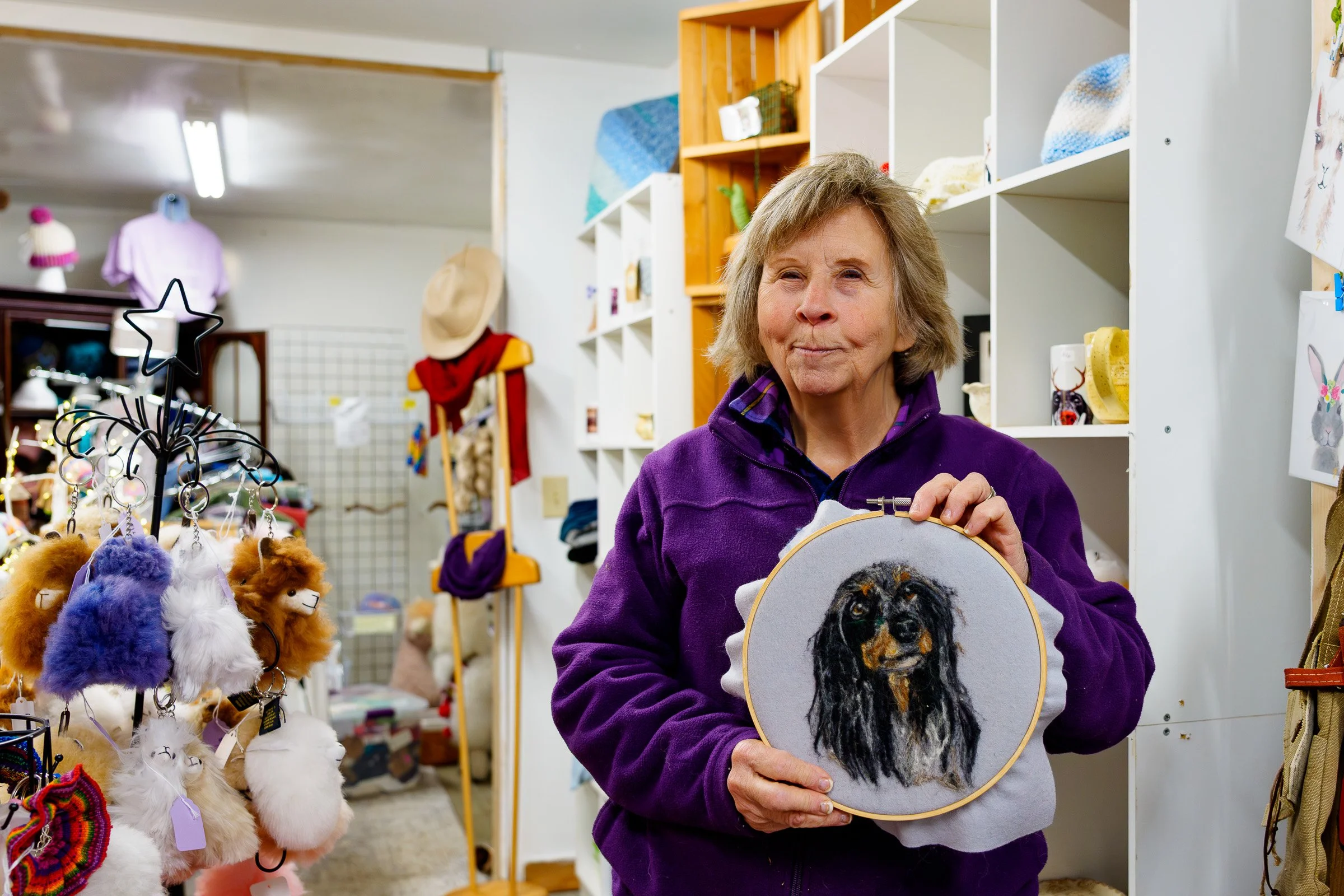
Anne had learned to knit when she was nine. Over the years, she added crochet, embroidery, felting, and quilting to her list of crafts. The impulse to make, to sit with something and bring it into being, had always been there. Her grandmother had been a quilter and gardener who worked with her hands. That lineage, whether inherited or absorbed, had left its mark.
“We just loved crafting,” she says.
The animals came later, but they fit immediately into that way of thinking.
The first animals arrived in the spring of 2016. Alpacas at first, soft, curious, and undeniably appealing. But it did not take long for the vision to expand.
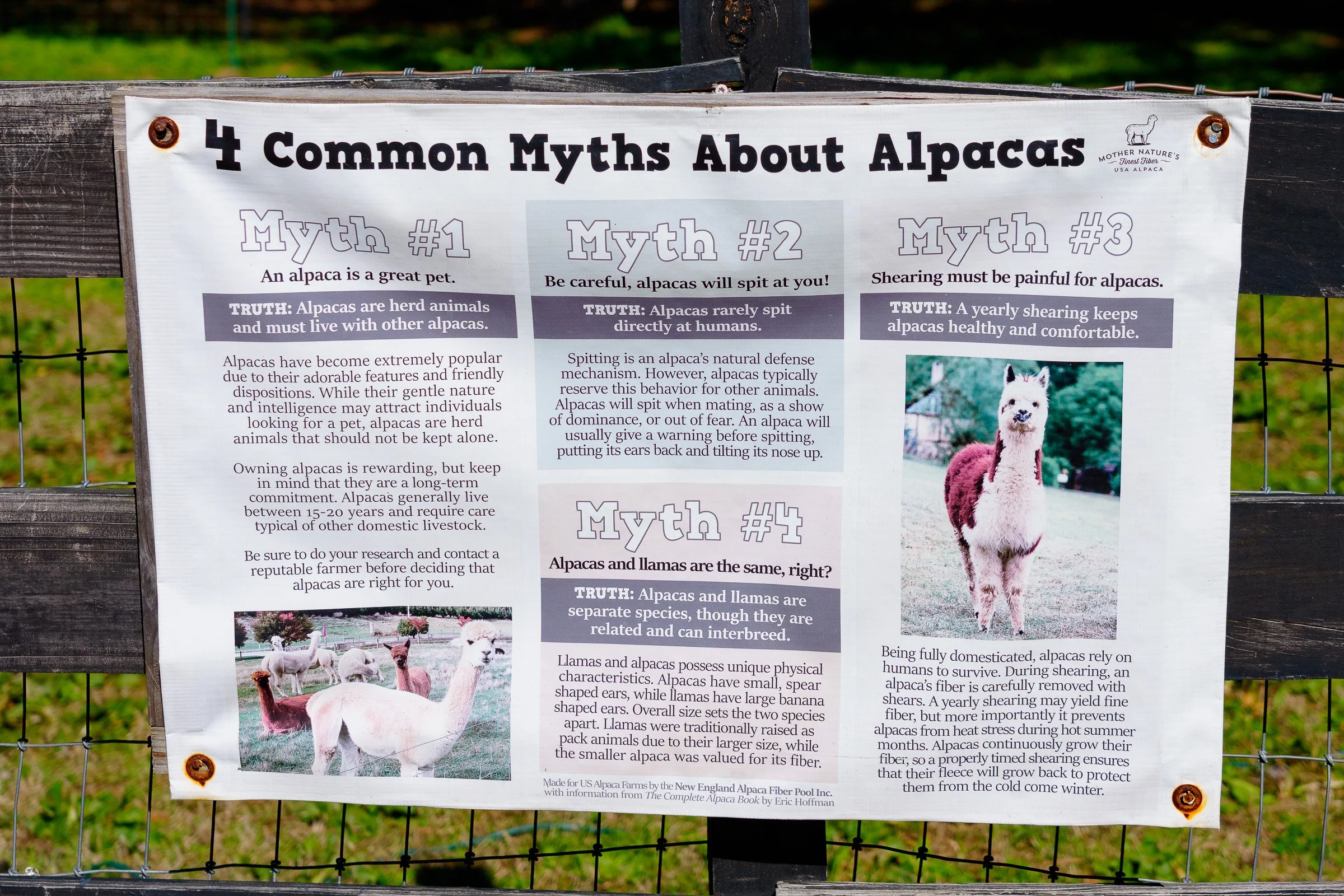
“We didn’t want to be just like every other alpaca farm,” she explains. “We wanted to be a fiber farm.” That distinction reshaped everything.
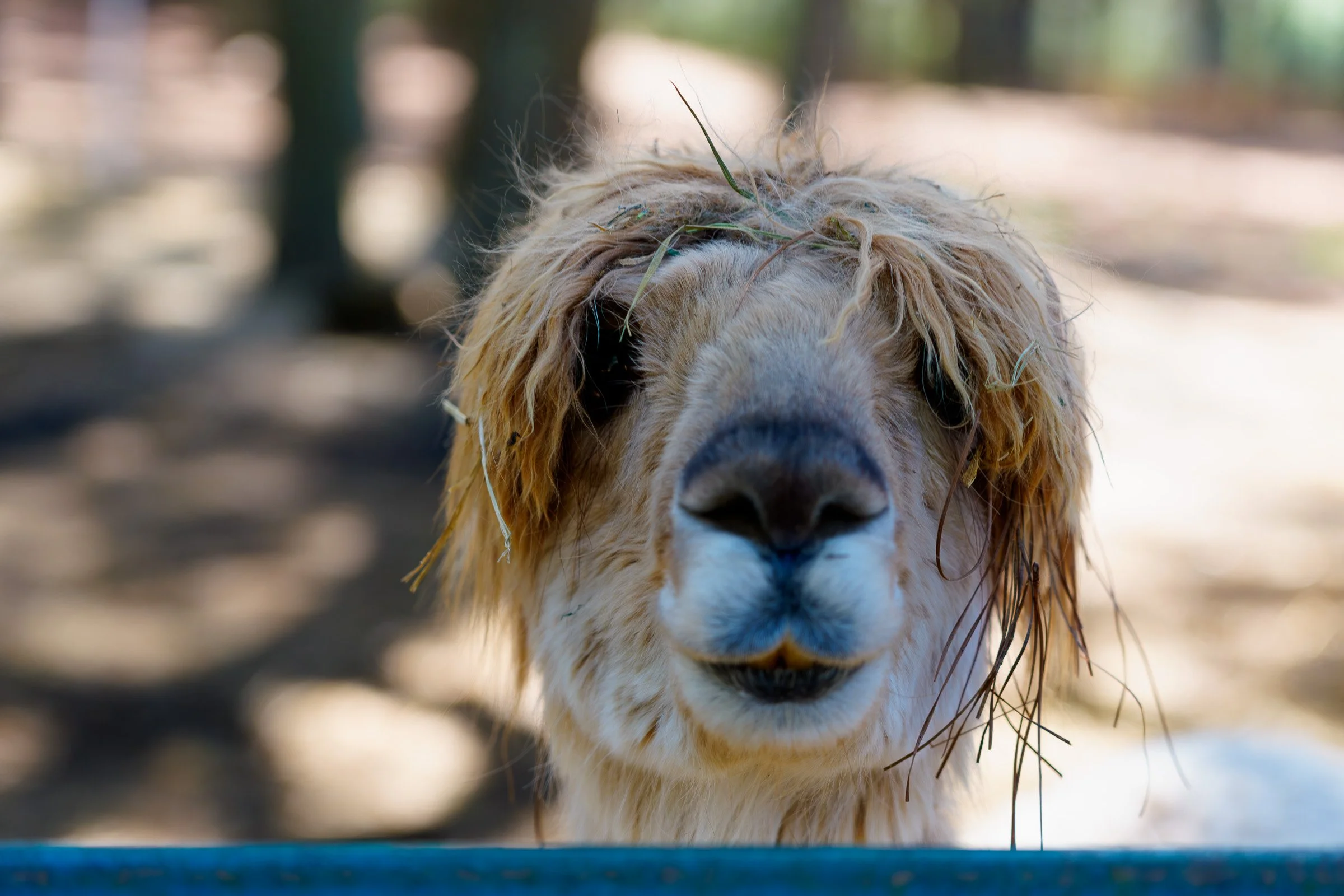
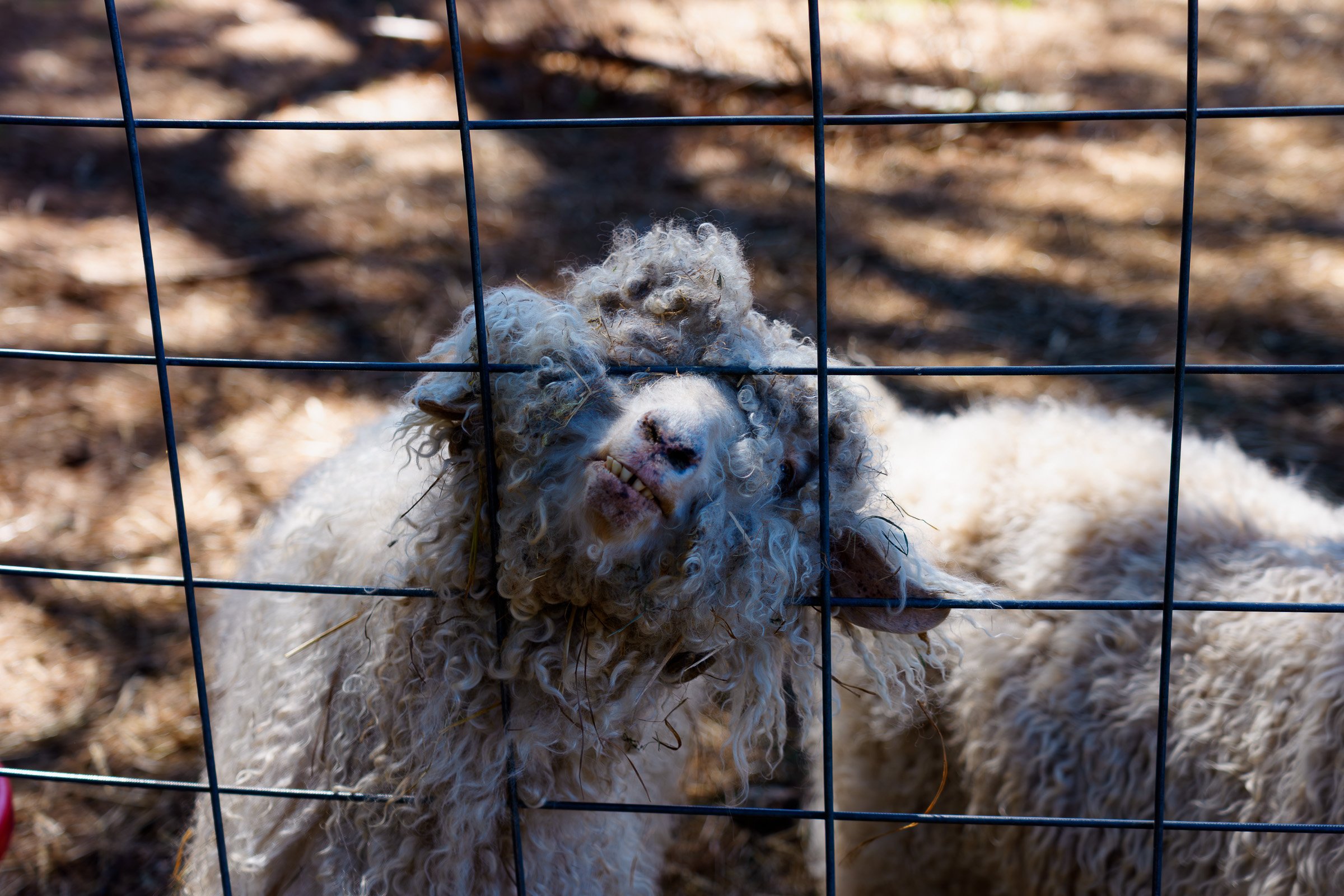
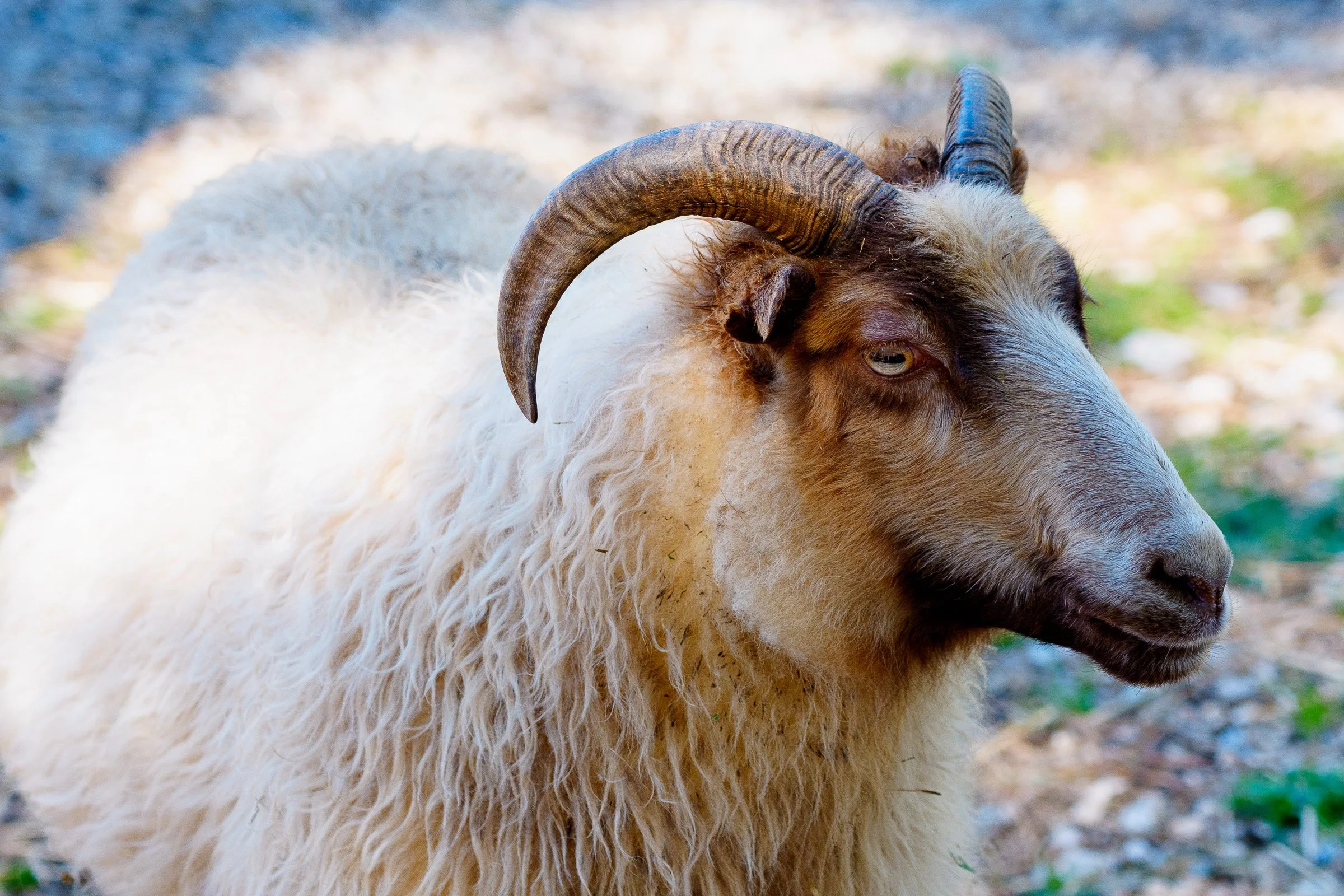
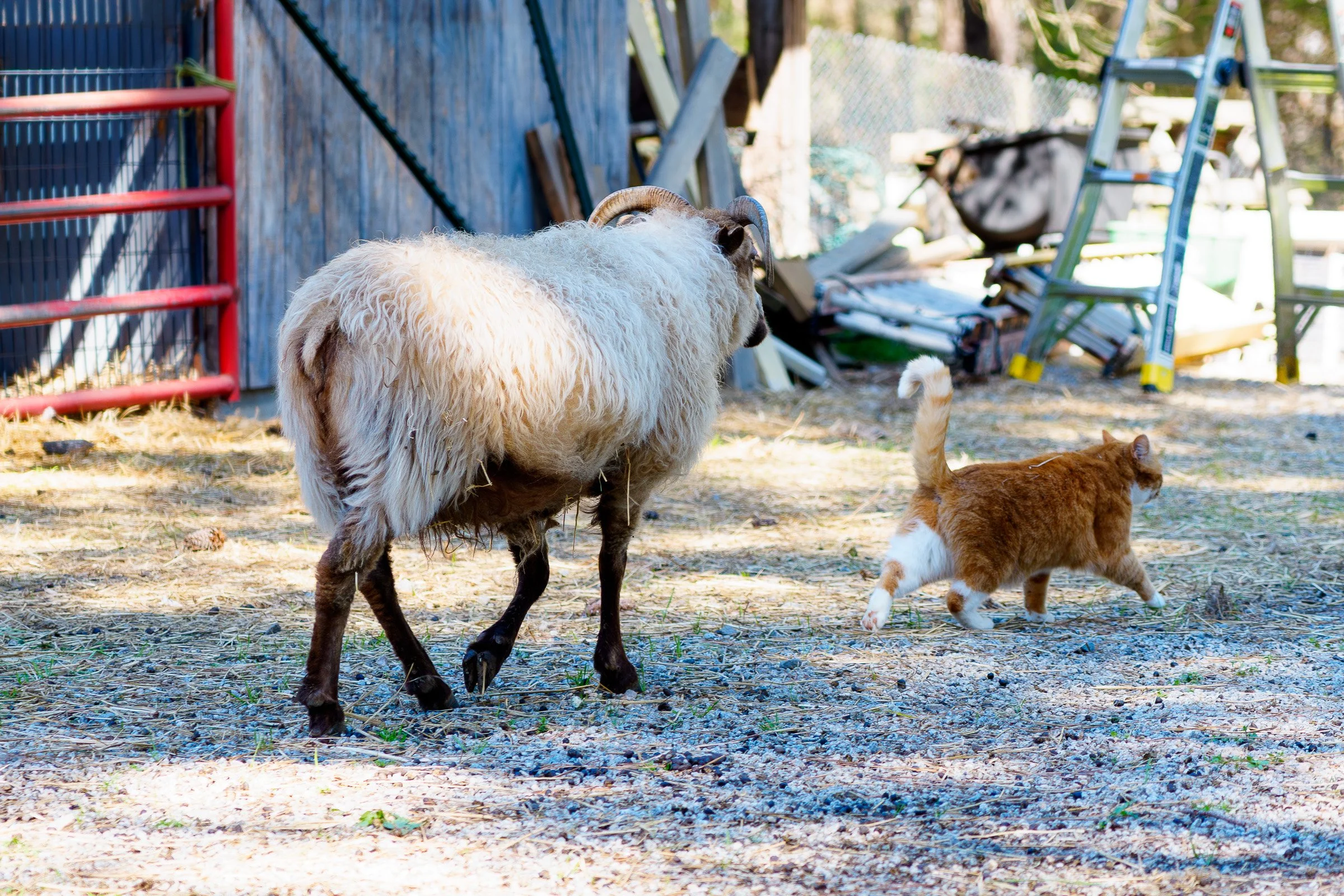
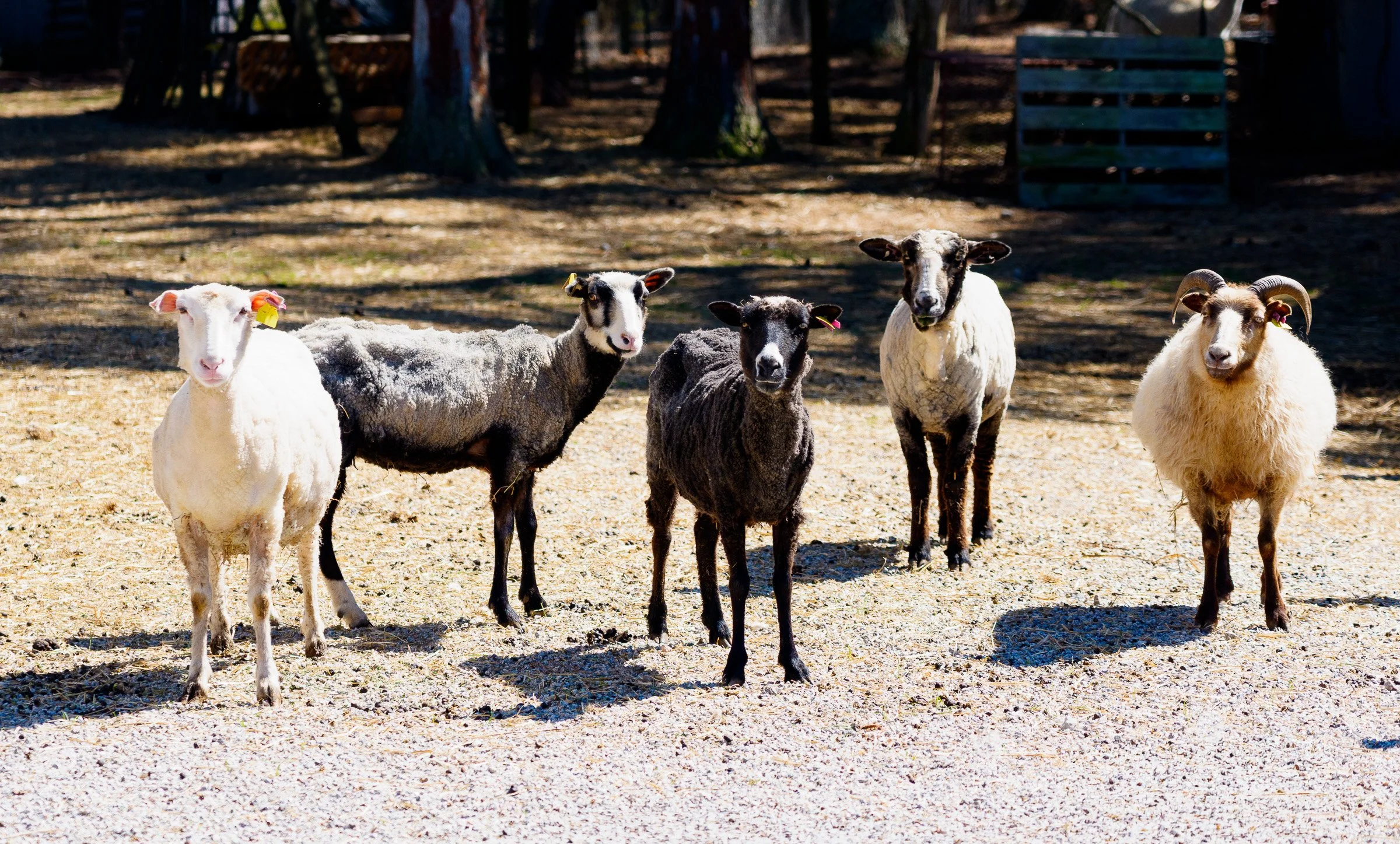
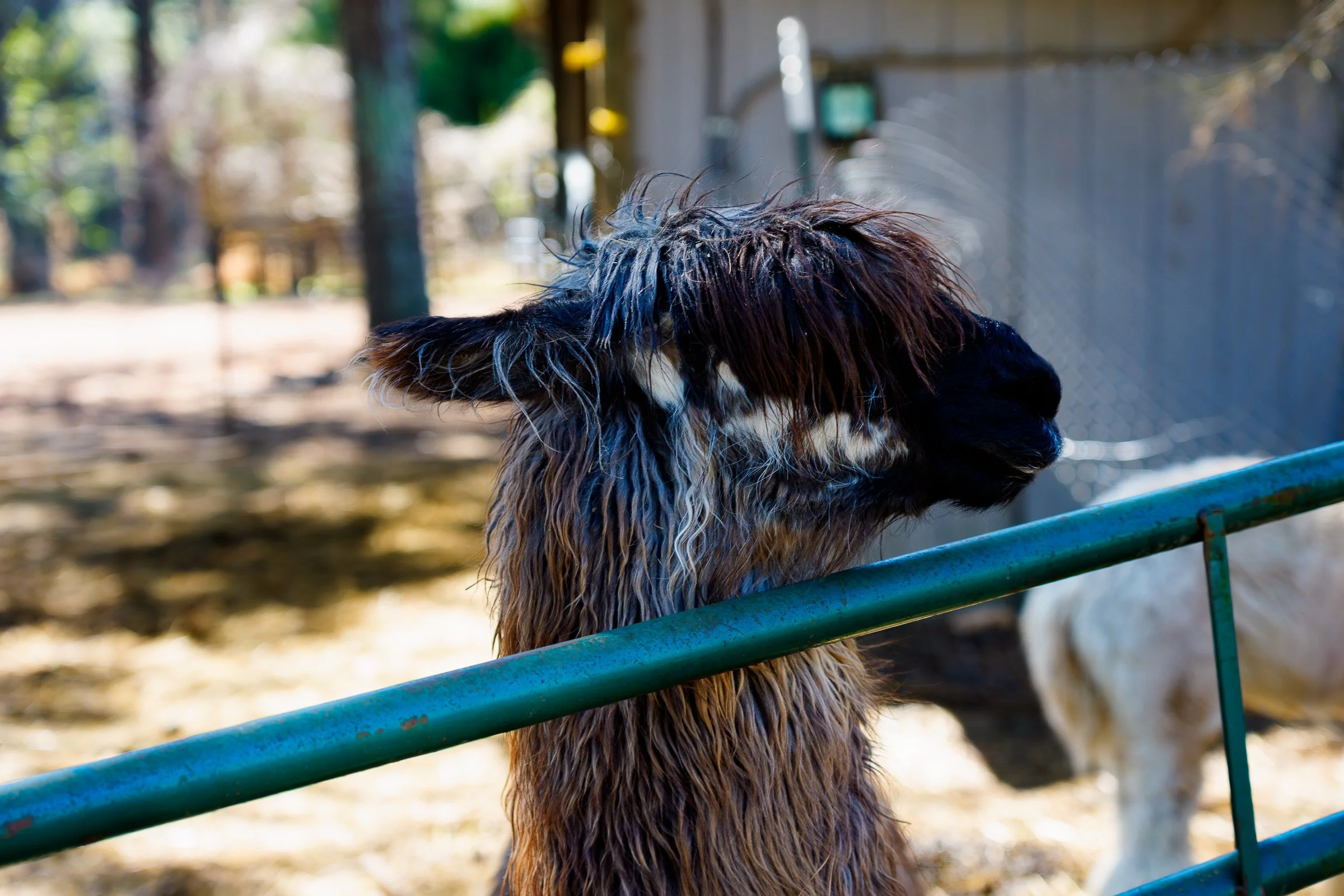
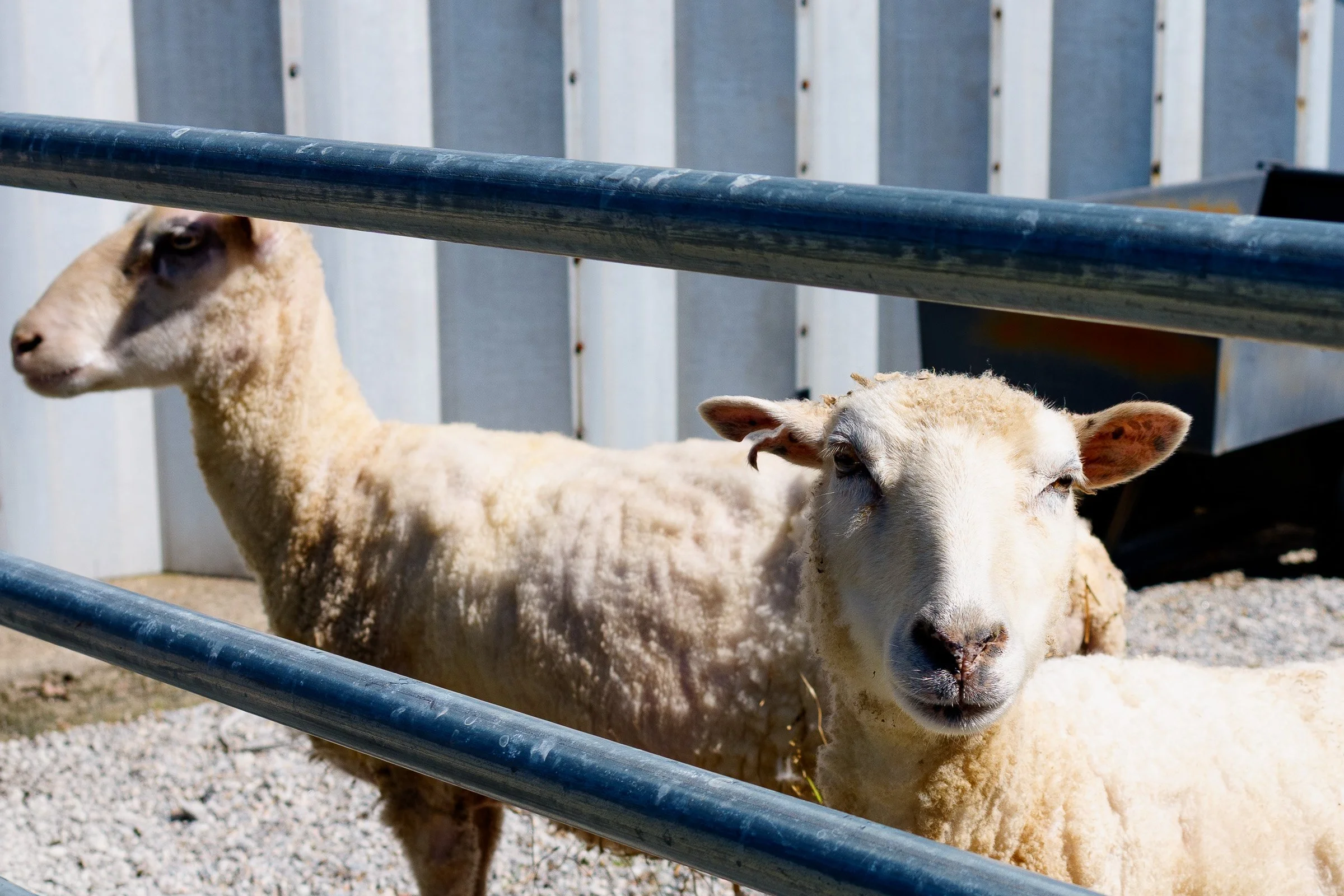
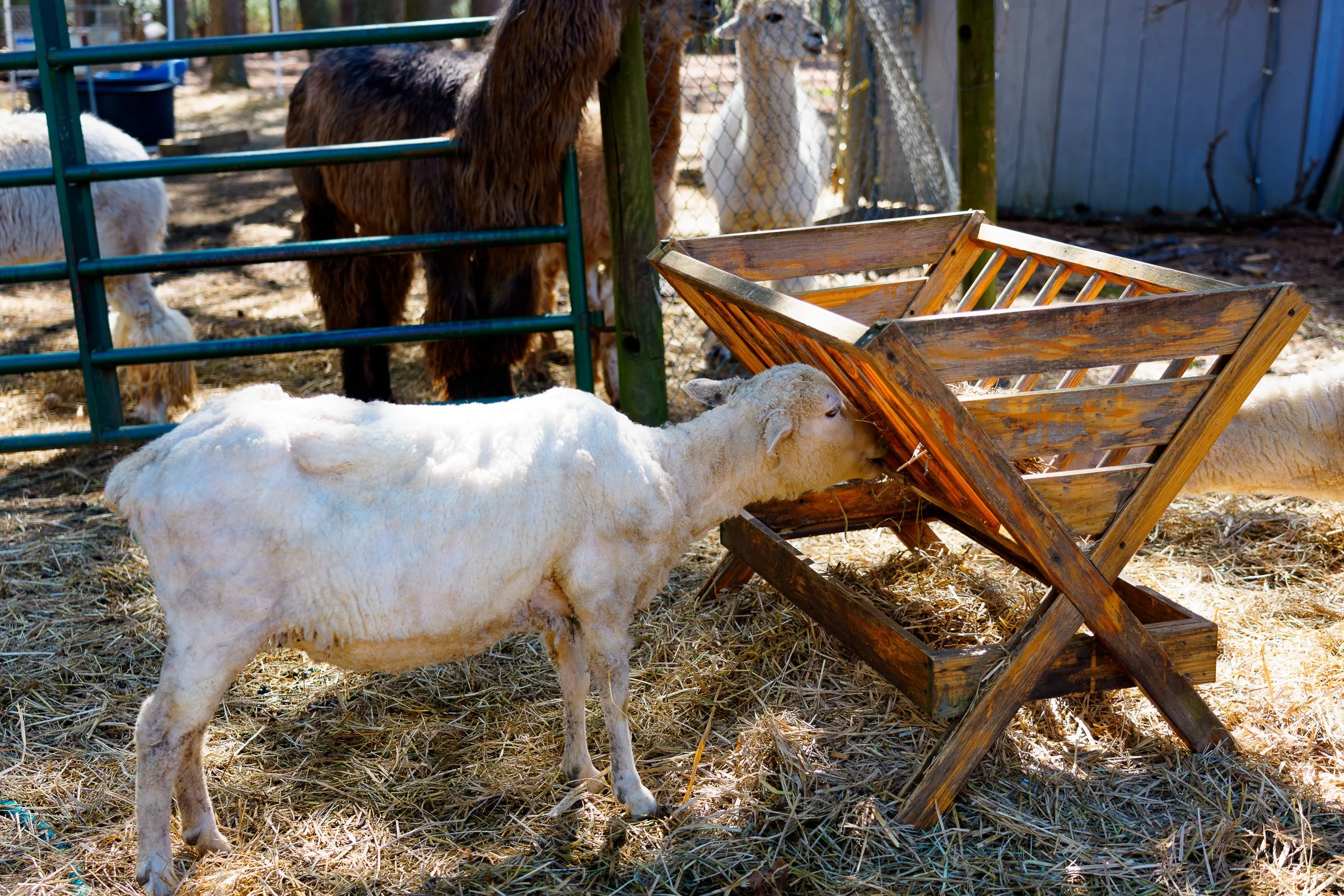
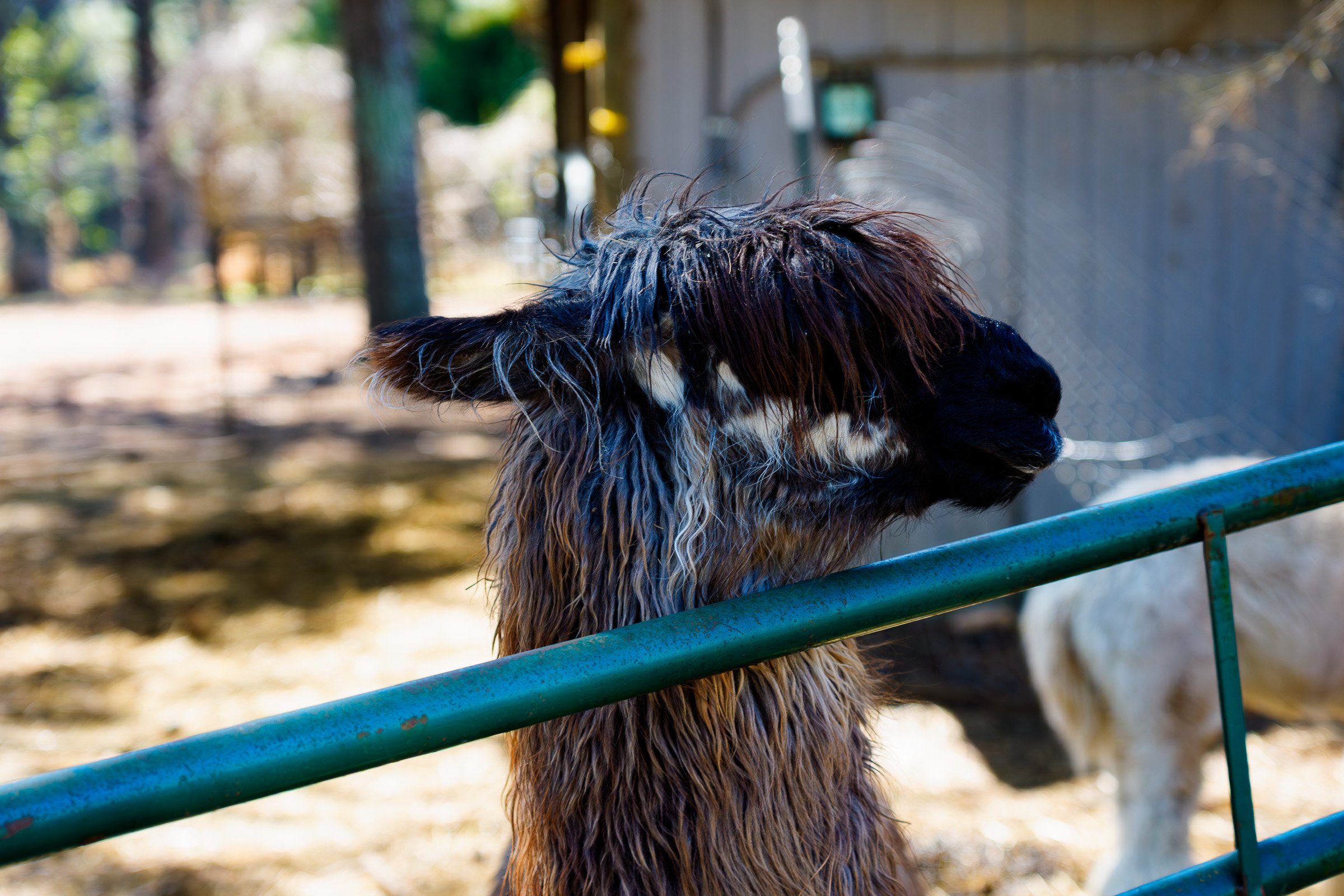
Alpacas remained, but they were joined by sheep for wool, Angora goats for mohair, and eventually llamas for protection. Each addition was not just about the animal itself, but about what it contributed to the larger ecosystem of the farm, both materially and conceptually.
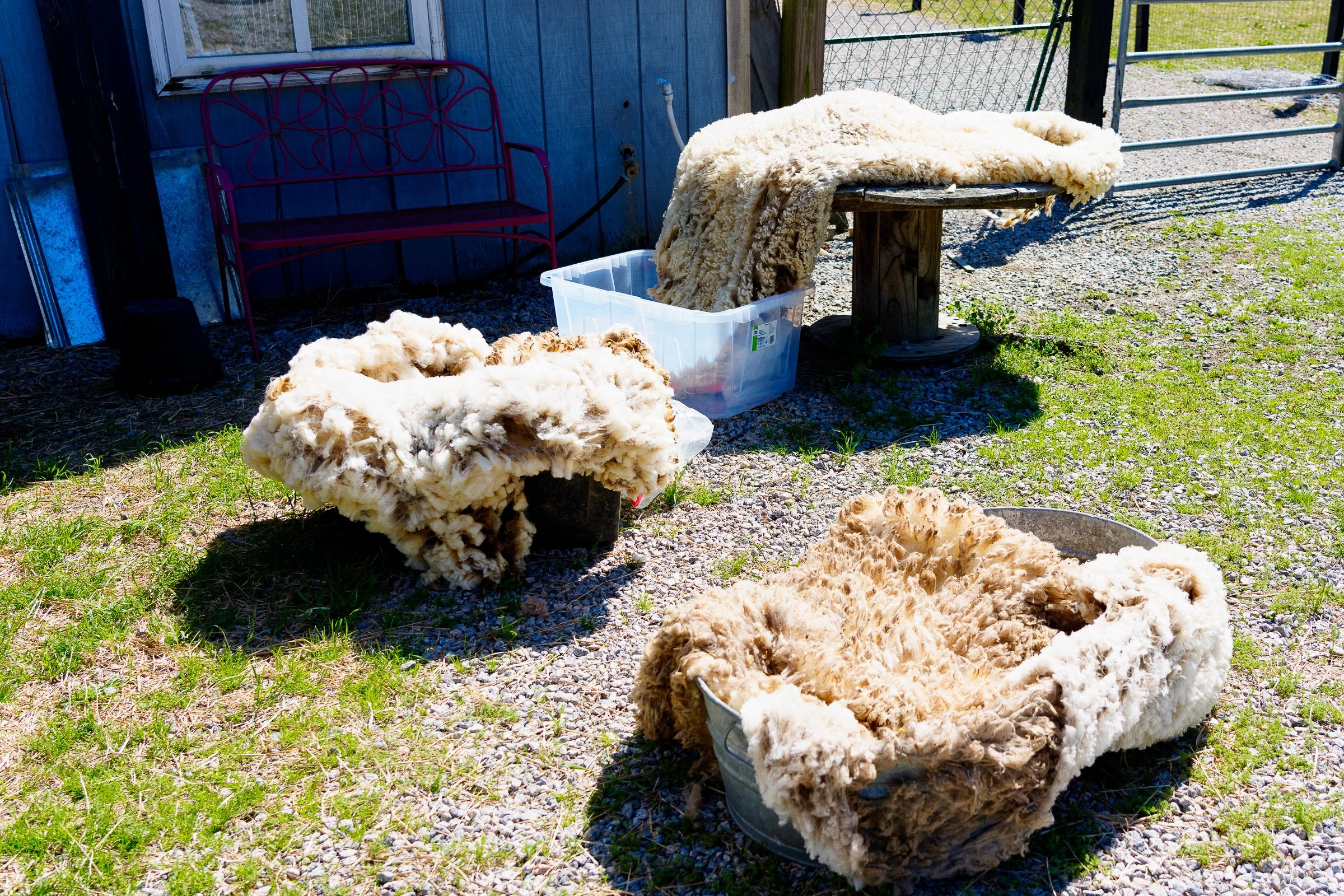
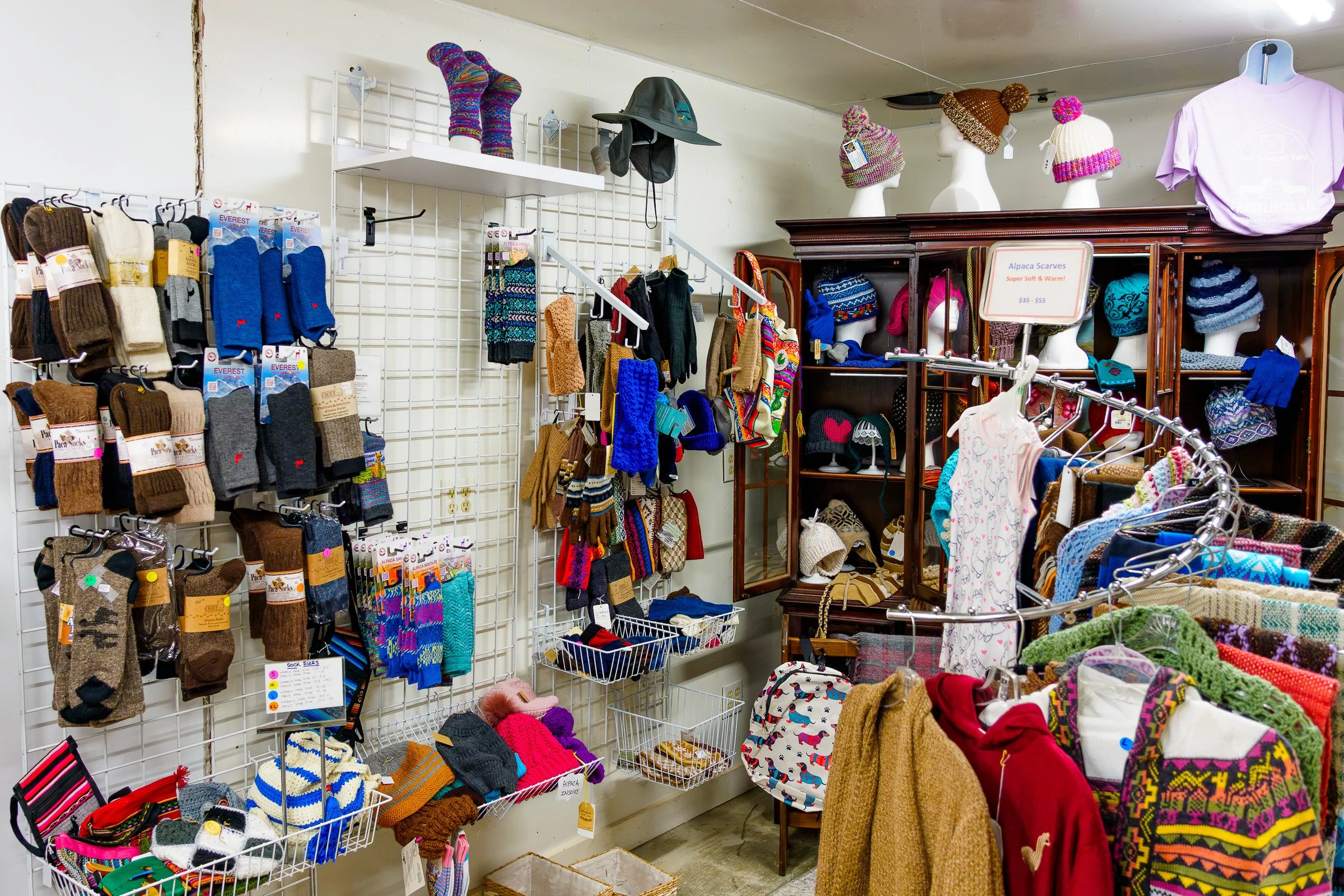
Fiber became the thread that tied it all together. The process is both simple and intricate. Animals are shorn. Their fiber is sorted, graded, and sent to a nearby mill in nearby Youngsville, where it is washed and spun into yarn. Some of it returns in skeins, ready to be knitted or woven. Some remains as roving, soft and cloudlike, waiting for the hands of a spinner. Some is dyed, some is felted, some is transformed into objects that carry with them the story of their origin.
And even what cannot be spun is not discarded. “There’s nothing wasted,” she says. Lower-quality fiber becomes mulch or garden pellets. In other places, it has been used for insulation. The farm operates on a principle that feels both practical and philosophical. Everything has a purpose, if you are willing to see it through. “You go in the whole way.” she says.
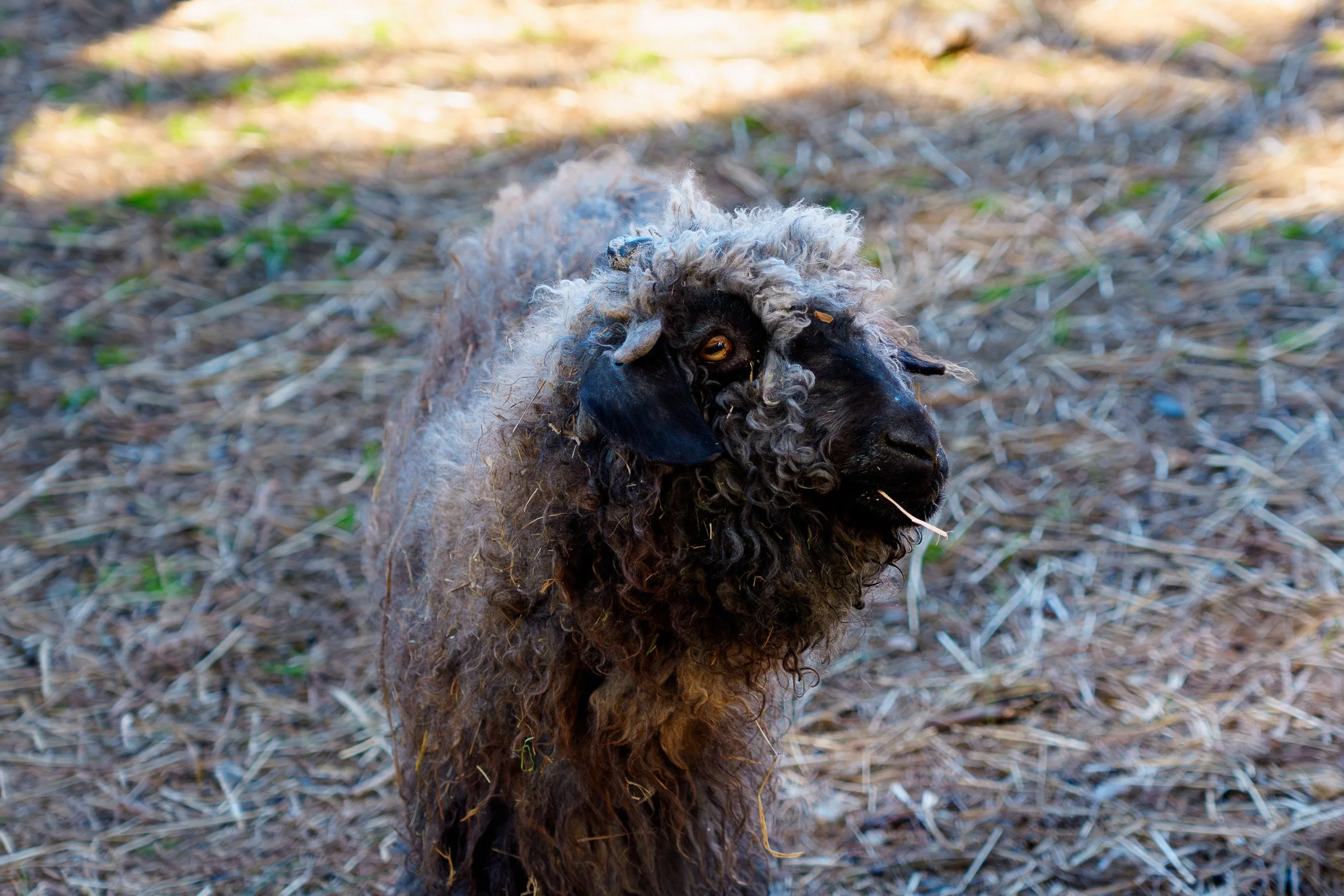
Spend enough time at Two Dachshund Farm, and you begin to understand that the animals are not background. They are the center of it all, not in a sentimental sense, but in the way that relationships shape the rhythm of a place.
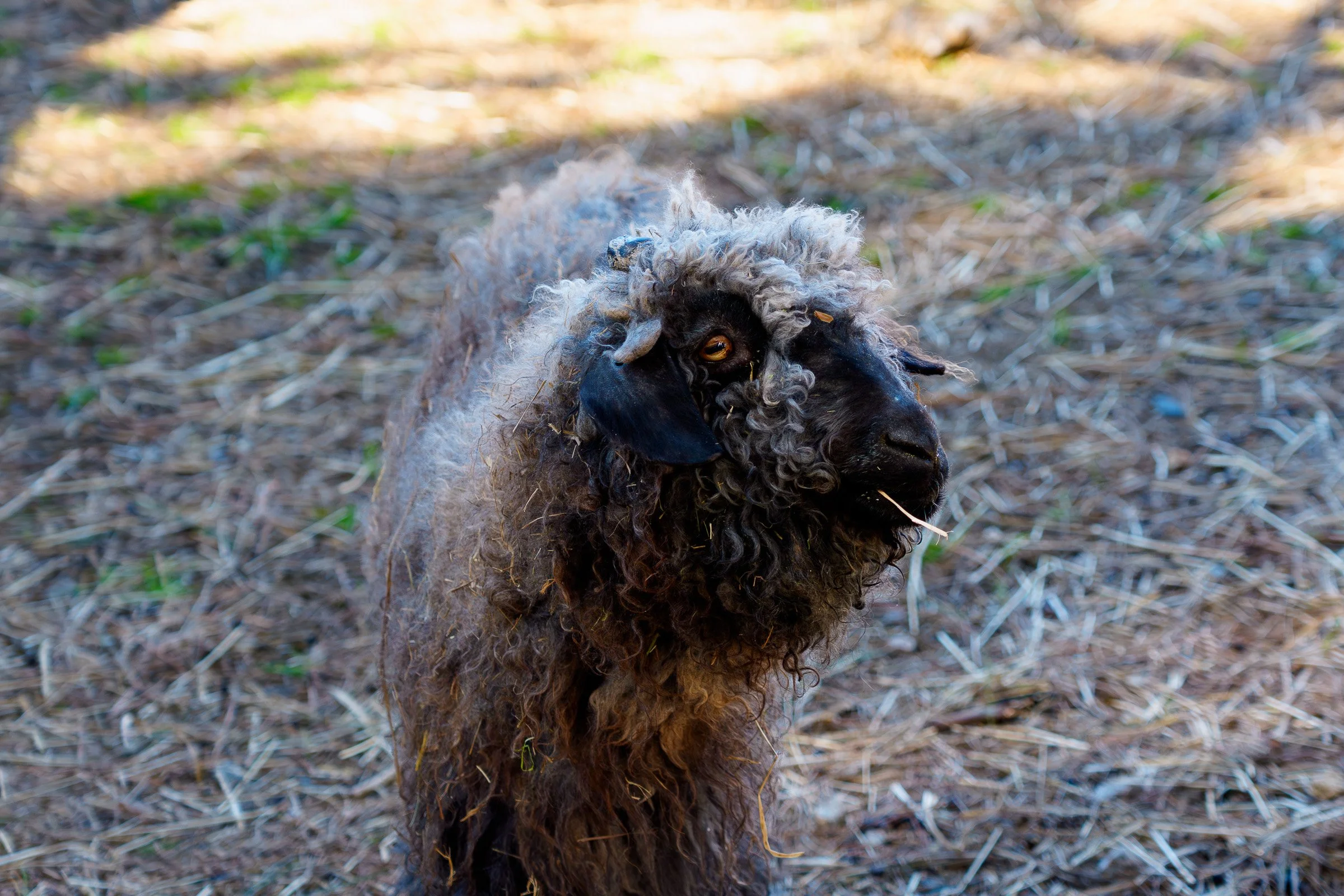
There is Sammy, whose likeness has been needle-felted into small dolls that visitors eagerly take home. Landry is gentle and curious and has even been invited to attend a wedding, outfitted with a bow tie for the occasion. Chief will approach for food but shies away from touch, as though affection were something to be negotiated carefully. And then there are the goats.
“Everybody told us when we got goats that if your fence can hold water, then you should get goats,” she says, laughing. “If they see an opening, they’re gonna push.” They are, by her account, brilliant and slightly unruly, creatures that test boundaries not out of malice, but out of curiosity. “They’re incredibly smart. They’re too smart for their own good.”
Even the more reserved animals reveal themselves over time. Alpacas, often thought to be aloof, have their own ways of connecting. One will sneak up behind her as she works, curious about the scent of shampoo in her hair. Another will hover just out of reach, watching, waiting. It is this accumulation of small, daily interactions that transforms the work from routine into something closer to relationship. “I love all my animals, but these guys just captured my heart.”
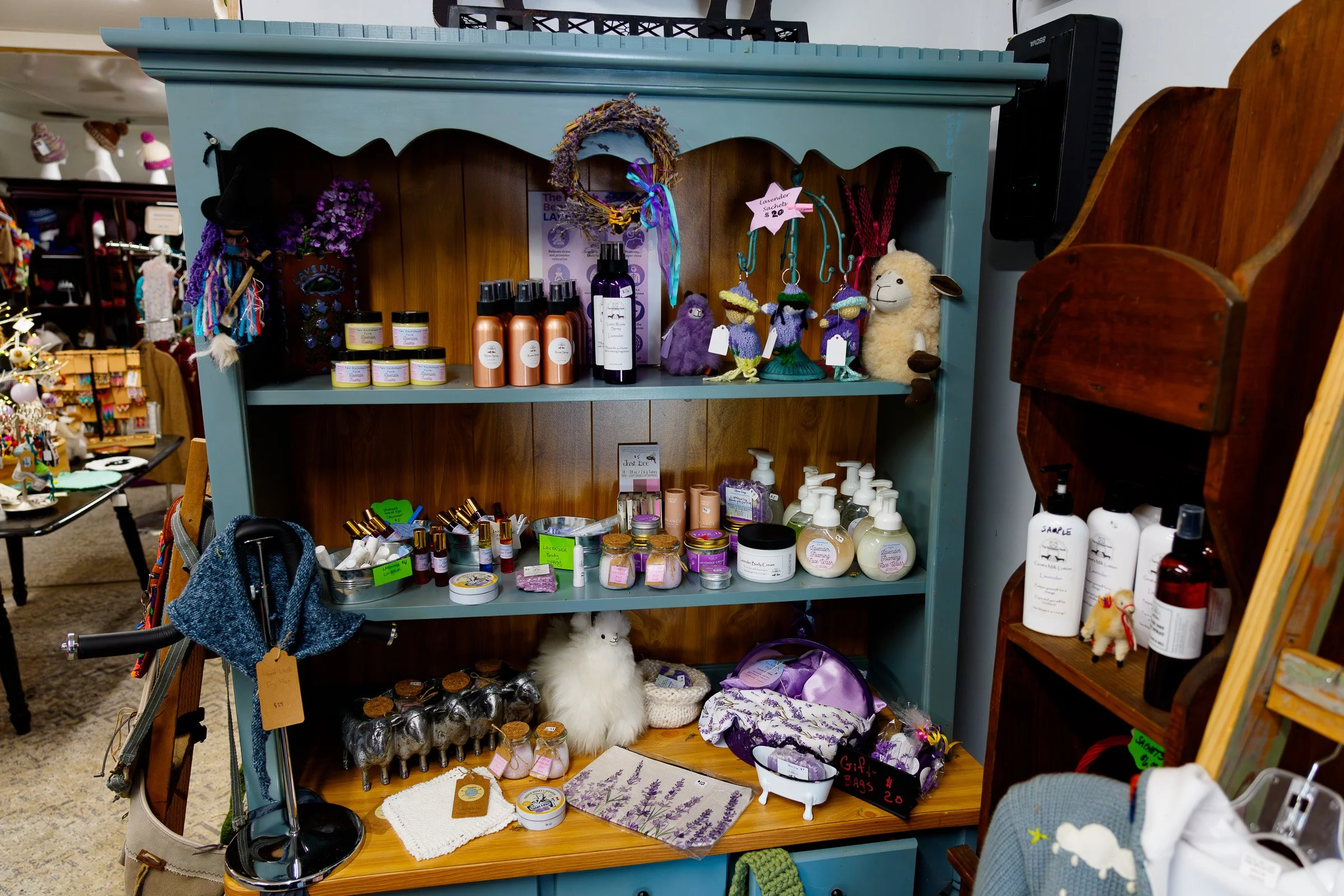
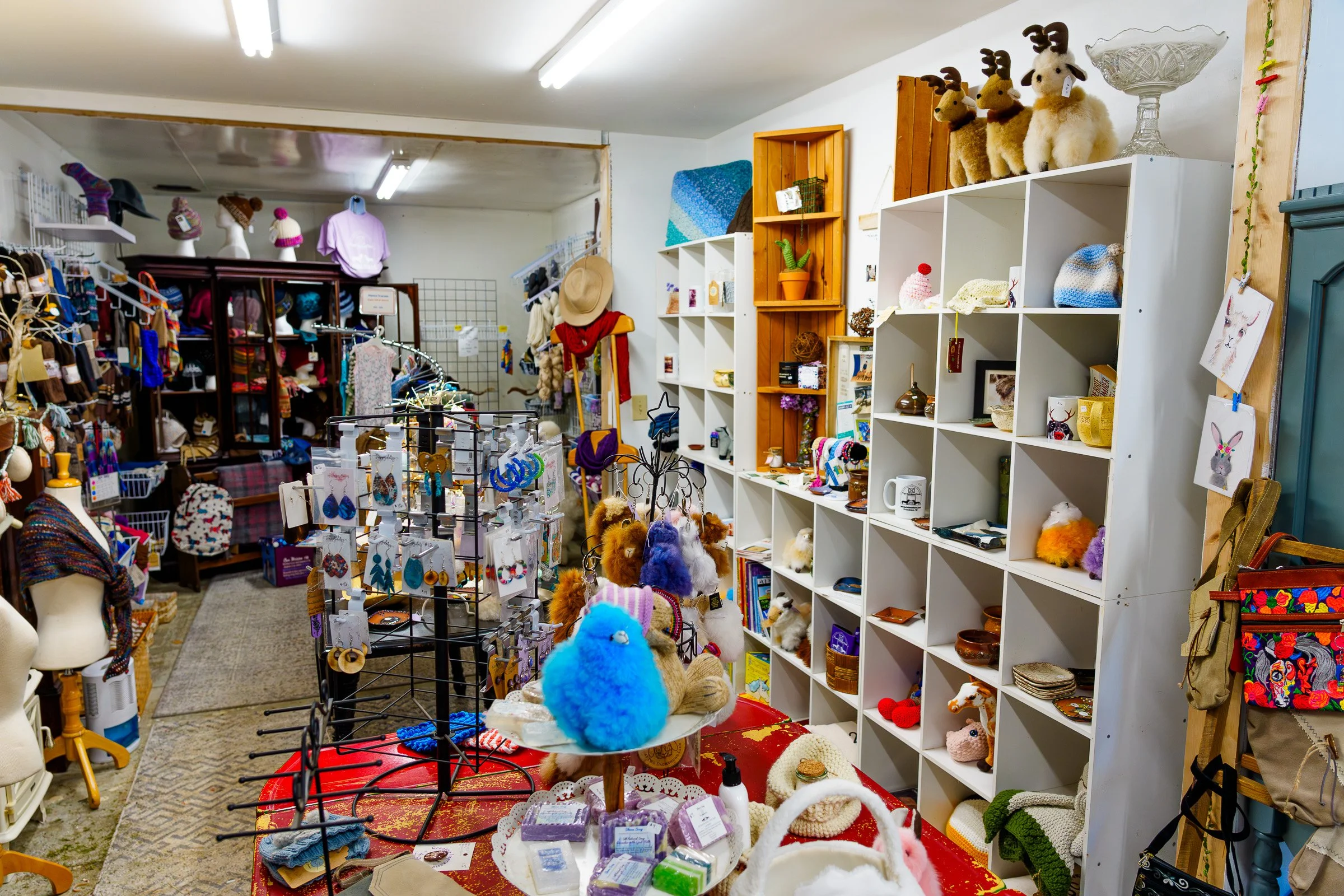
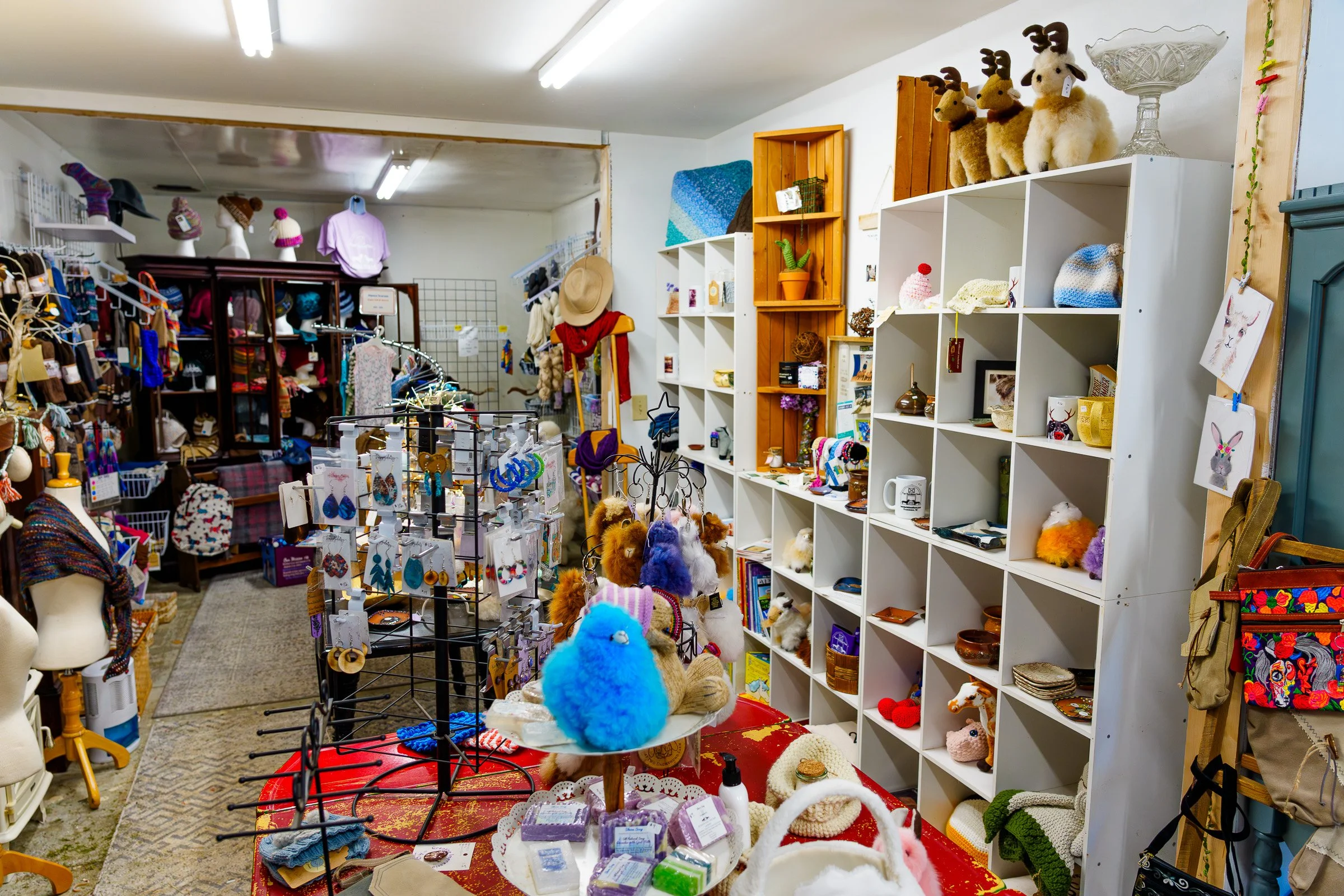
If the animals are the beginning of the story, the act of making is its continuation. Inside the barn store, a space that feels less like a shop and more like an extension of the home, skeins of yarn sit alongside handmade goods, pottery from local artists, and small felted figures that seem to carry personality in their stitched expressions. Some of those figures are modeled after specific animals on the farm.
Visitors meet Sammy, for example, and then purchase a small version of him to take home. The connection is immediate and tangible. “They like the experience of meeting the animal and then being able to buy something that comes from that animal. It’s special.” For her, the process is even more layered. “I think about the animal,” she says, describing the quiet hours spent knitting or felting. “And who I’m making the gift for.” In that moment, the work becomes something more than craft. It becomes a kind of translation, turning fiber into object, object into meaning. There is a satisfaction in that, she says, that is difficult to replicate elsewhere.
Beyond its role as a working farm, Two Dachshund Farm has become a place of learning that reflects the growing creative energy in Franklin County. School groups arrive throughout the year, sometimes in numbers that stretch the capacity of the land. Children move through stations, meeting animals, learning about fiber, and trying their hands at simple projects. Older students are introduced to needle felting. Younger ones wrap yarn around cardboard shapes, creating their first tactile understanding of how raw material becomes something made.
The scale can be daunting, dozens, sometimes more than seventy children at a time, but the intent remains personal. “It’s a lot of fun to do the school trips,” she says. There are plans for more. Classes, workshops, collaborations with local libraries, and connections to the broader arts movement growing across the county. Demonstrations of spinning and weaving. Opportunities for people to see, firsthand, the path from animal to finished piece. In a place like Franklin County, where agriculture and craft still sit close together, that kind of visibility matters. The farm becomes, in that sense, a bridge. A place where knowledge is not just shared, but experienced.
Come early summer, the farm shifts again. Lavender fields bloom along the driveway and across the property, their color soft but unmistakable against the green. Visitors arrive in increasing numbers, drawn by the promise of fragrance and the simple pleasure of walking through rows of flowering plants.
There is a Lavender Day, held on the first Saturday in June, where the farm opens itself more fully, offering classes, handmade goods, and the chance to gather in a way that feels both celebratory and grounded in the land. Last year, more than a hundred people came. “We ran out of parking,” Anne says, half laughing, half amazed.
In the end, what lingers about Two Dachshund Farm is not any single detail, but the way everything connects. The animals are not separate from the craft. The craft isn’t separate from the land. The land isn’t separate from the people who come to visit, to learn, to carry a small piece of it home. It is a place built not on spectacle, but on accumulation - of care, time, and attention. And perhaps that is what makes it feel, in the quietest way, extraordinary.
Because here, in Franklin County, in the soft hum of animals and the steady rhythm of hands at work, you are reminded that making something, truly making it, requires more than skill. It requires presence. It requires patience. It requires a willingness to stay with a thing long enough to understand it. At Two Dachshund Farm, that understanding is everywhere. You see it in the yarn. In the fields. In the way an alpaca lingers just a little closer than before. And if you are paying attention, you may find that you carry a bit of it with you when you leave.
You can visit Two Dachshund Farm in Franklinton at 313 Cedar Creek Rd the first weekend of every month for a farm tour or call for private tours. Guests can also book a farm stay on AirBnB here. To learn more about what the farm offers, visit https://twodachshundfarm.com/.