
The Lake at the End of the Lane: The Paintings of Boni Arendt
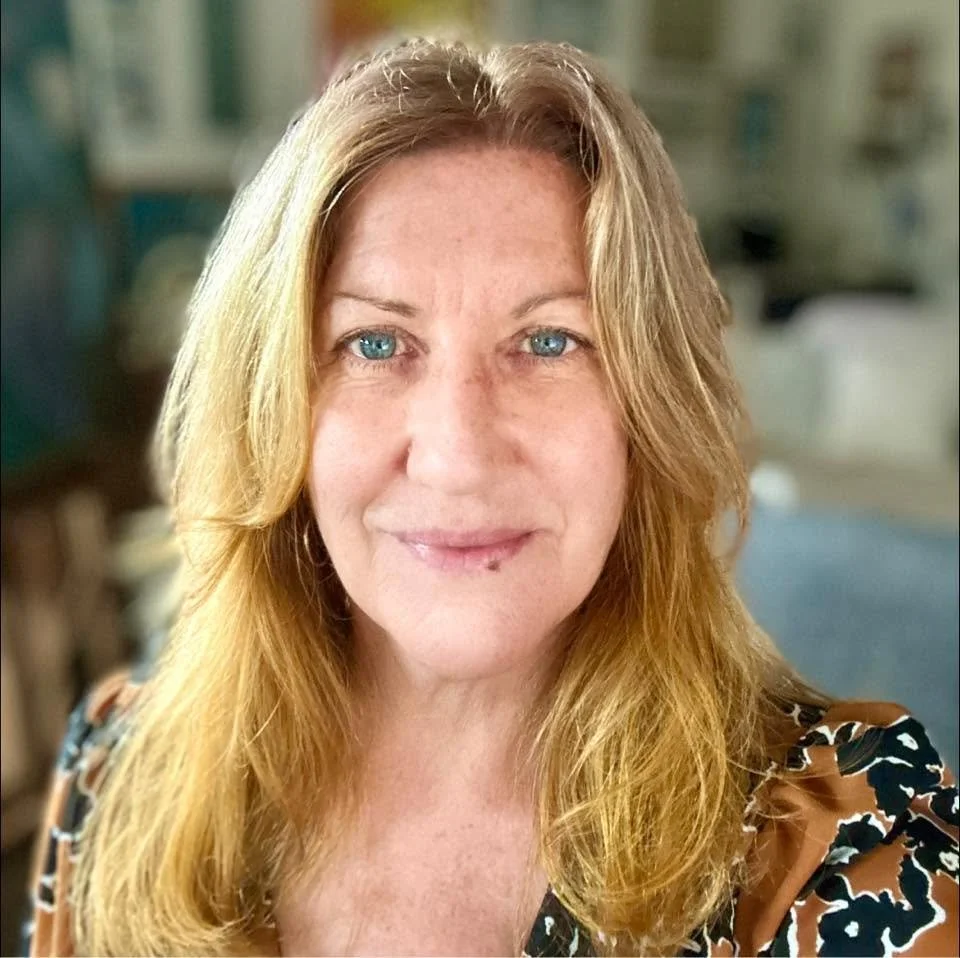
The road to Boni Arendt's studio doesn't announce itself. You turn off the highway outside Louisburg, past mailboxes leaning slightly with age, and onto a long dirt path through the pines and hardwoods of Franklin County. You half wonder if you've made a wrong turn, until the trees finally open onto a lake gilded in morning light, holding the sky like a mirror. The studio sits low and wood-sided at its edge, looking as natural to the landscape as the oaks and cattails around it.
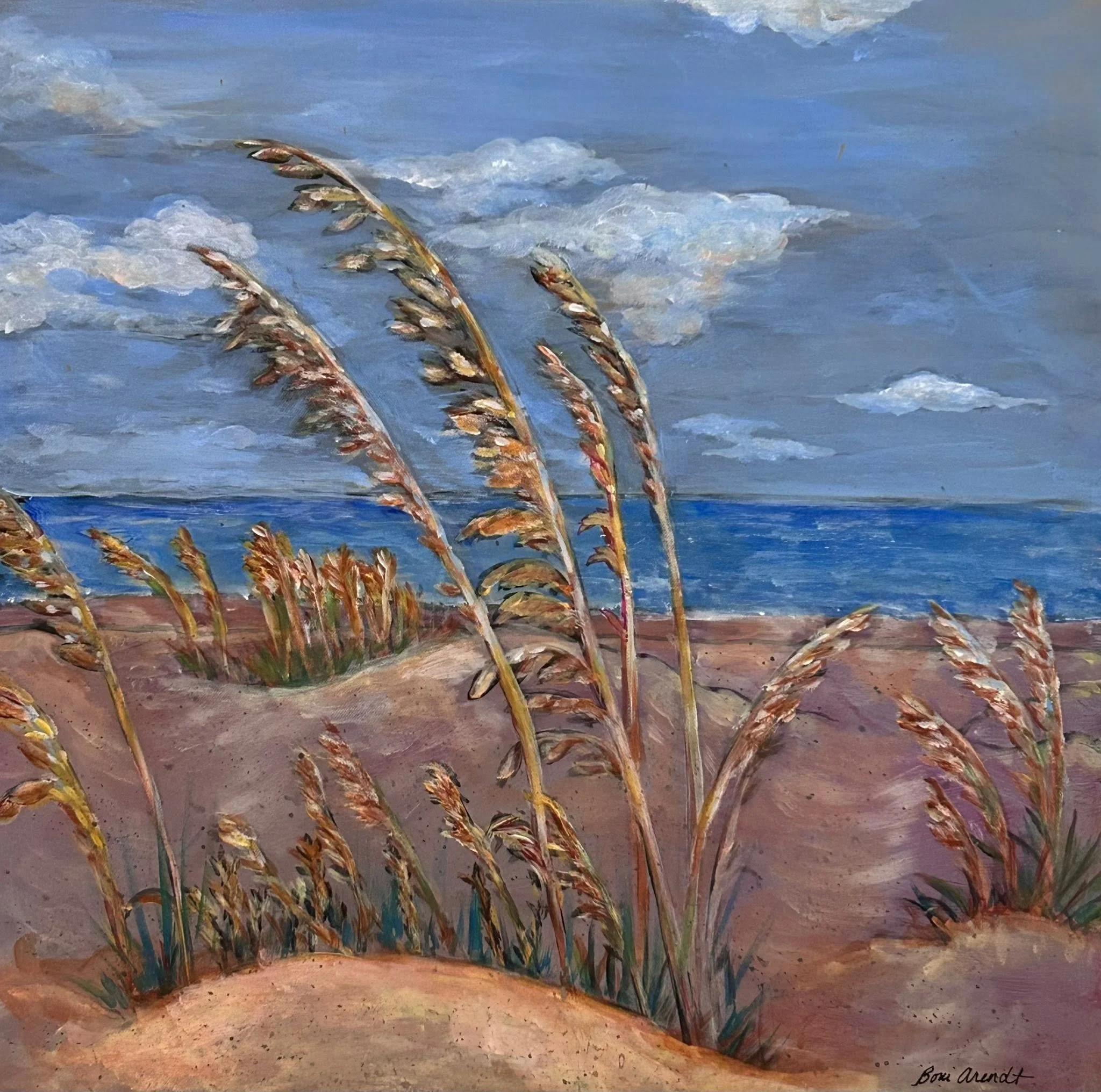
Inside, Arendt puts the tea kettle on while you take in the walls. Canvases cover nearly every inch of them: luminous beach scenes, portraits of laughing children, joyful visions of flowers, all of it carrying the same loose and confident hand even as the subjects keep shifting. Overstuffed chairs are pulled close for the kind of conversation that doesn't watch the clock. Through the window the lake goes on shimmering, calm enough to make you feel instantly welcome.
"It's a blessing and a curse to be an artist," she says, settling into her chair. "You feel gifted, and people tell you how talented you are. But then you compare yourself to all the other artists out there." She looks out at the water for a moment. "I'm grateful for the gift. It's a struggle. But it's innate. It's part of who I am."
That tension between gift and doubt turns out to be the thread that runs through her whole life. Ask Arendt when her art really began and she doesn't point to college or to England. She points to sixth grade, to a teacher named Mr. Hooker who handed her an entry form for the North Carolina Wildlife Emblem contest. Hooker had injured his right hand and taught himself to draw with his left, producing chalkboard images his students found almost miraculous. "He was so inspiring," she recalls. "And very encouraging." She won the contest at twelve, and from then on she was the artist her whole small town turned to.
That early confidence carried her to East Carolina University, where she started in art education before her own ambition pulled her somewhere more specific. Midway through, she switched her major to painting and drawing, a decision that set the pattern for everything that followed: choose the harder, less certain path, and trust she'd figure out the rest along the way.
After graduation she did exactly that, moving to England to study Interdisciplinary Design at Berkshire College of Art and Design and painting portraits to make ends meet while she was there. She traveled through Egypt, Amsterdam, France, and Italy. Somewhere among the Italian Renaissance masters - Raphael, Michelangelo, Leonardo - something settled into place that never quite left her.
"Drawing is really my underlying foundation," she says. "Learning to draw is, I think, the foundation of everything."
It's a foundation she still points back to. She mentions Juergen Gorg, a painter she encountered during her time in England whose romanticized, stylized work let the drawing show through translucent washes of paint. "You could see the hand in it," she says, and it's the same thing she'd admired in Mr. Hooker's chalk lines years earlier: the structure underneath, visible even through everything layered on top.
Eventually she came back to North Carolina, where she met the man who would become her husband. He had built a house on his family's land in Franklin County, and in 2003 she followed him down that same dirt road to the lake. They married that year, and the life that took shape from there kept circling the same instinct that had carried her since sixth grade: walk toward the thing you don't yet know how to do.
She earned a master's degree in education and spent three years teaching at a Chinese-language school in Morrisville, and it was there, almost by accident, that she finally understood something about herself she'd been circling for years. She is as much a teacher as she is a painter.
"It's so natural to me," she says, almost reluctantly, like someone confessing to a talent she once tried to outrun. "I can just walk in and teach. I don't have to do a lot of preparation. It's just there."
These days that teaching happens in the studio itself, where she works with students one at a time and meets them, as she puts it, where they are. She talks about "tips and tricks," the shortcuts a fast, instinctive painter accumulates over years of practice. It isn't hard to trace that instinct back to its source: a teacher who drew with the wrong hand and never let his students forget what it looked like to make something beautiful out of limitation.
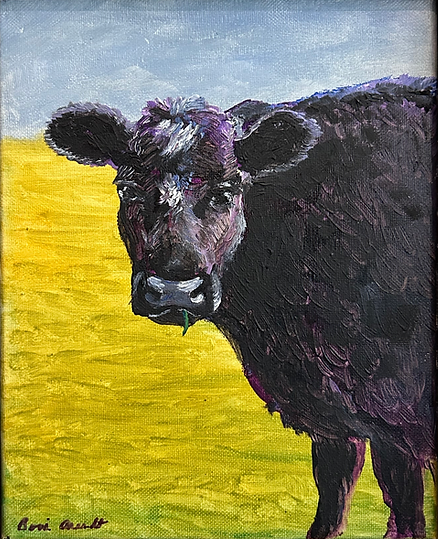
The paintings she produces in between lessons are impressionist at heart, even the ones that look like something else. There's real realism in her portraits, which carry the weight of faces she's actually studied. However, her deeper nature is to suggest rather than describe, to paint the energy of a thing rather than its inventory.
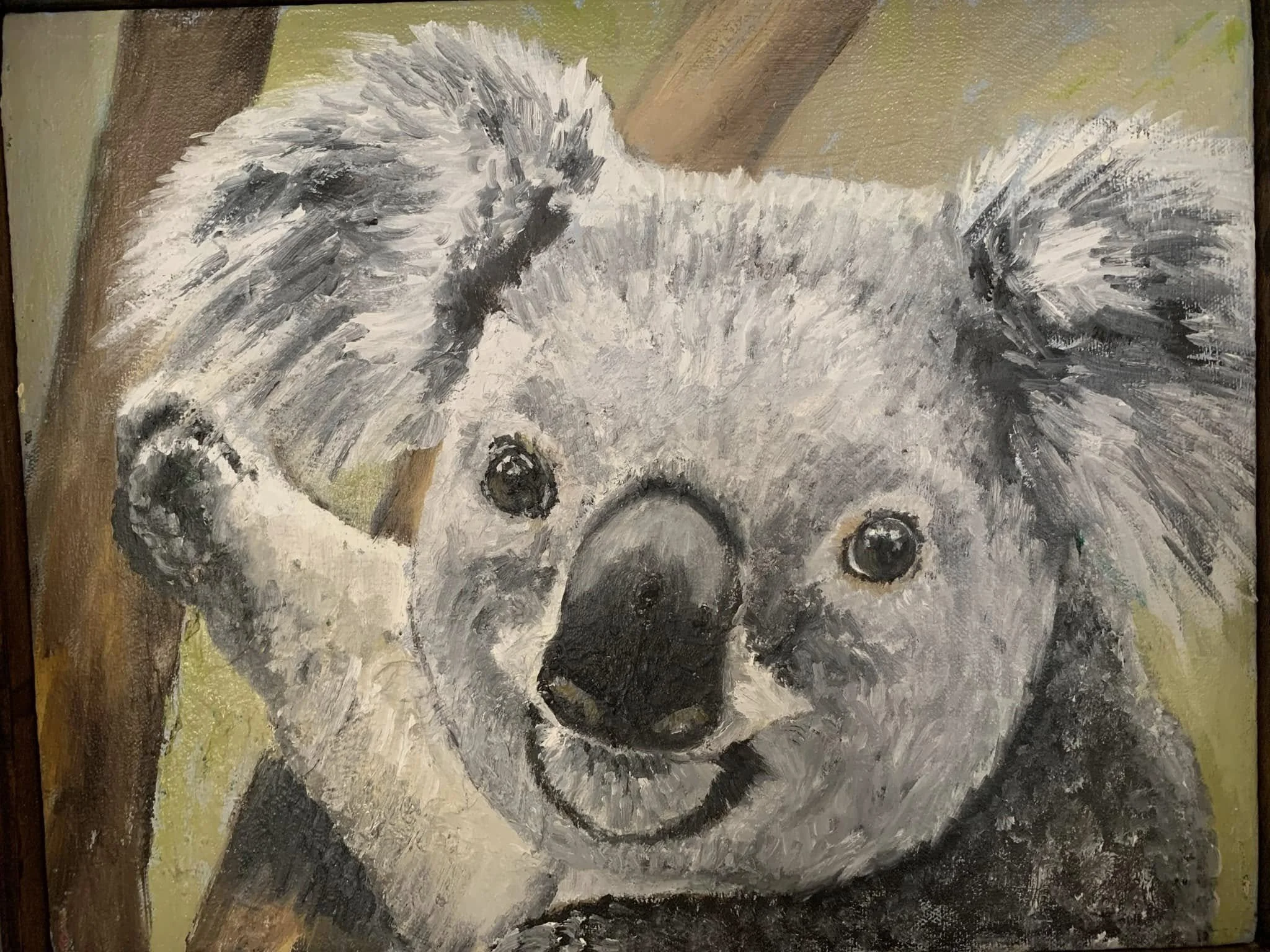
"It's the impression of what it feels like," she says, rolling the phrase around as if tasting it. The coastal Carolina landscape she grew up in, the farmhouses of the Piedmont, a still life of flowers in a vase, all of it gets filtered the same way - through impression rather than detail. And underneath every canvas, no matter how loose the brushwork looks on the surface, the drawing is still there holding everything up, the way bones hold a face
It's the same conviction that comes up when she's asked what she'd tell a young artist just starting out. She doesn't hesitate.
"It's always fixable," she says. "I think so many people are held back because they're afraid they're going to do it wrong, or that they can't correct it. But with art, you can always fix it. You can always go back." She pauses. "A lot of artists get caught up in that fear, and the fear just stops them."
Outside, she stands beside the thing that proves her own point. Just past the studio door, facing the lake, is a concrete sculpture she built herself, substantial and unhurried, the kind of object that looks like it has always stood there. She laughs a little when she talks about making it. She had never worked in concrete before. She wasn't sure it would hold, wasn't sure it would look like anything at all. But none of that uncertainty was ever reason enough to stop her. She figured it out the way she has figured out almost everything in her life, by beginning, by staying with it, by trusting that whatever went wrong could still be fixed.
The studio holds its warmth behind her. The tea has gone cool. And in both places, on the walls inside where years of paintings hang, and out here at the water's edge in the thing she built with her own hands before she knew how, the same conviction stands quietly in the open air.
Boni Arendt's studio is located at 200 Old Oak Lane, Louisburg, NC. Original paintings, portraits, and commission inquiries are available at boniarendt.com. Follow her on Facebook and Instagram.
