
Sanctified and Sultry: The Music of Jo Gore and the Kindred Roots
In a quiet corner of Franklin County, singer Jo Gore and her band Kindred Roots are chasing something older than genre. Jo will tell you the whole thing started with a chicken sandwich. On a Friday night not too long ago Jo picked up the phone, called around the Triangle to any musician she could reach and made her pitch plain: "Hey, I’ve got $200. Who wants $200 and a chicken sandwich Friday night?" That is how a lot of bands in this part of North Carolina get built, one gig and one favor at a time, out of the same loose rotation of players who keep finding each other at jam sessions from Raleigh to Sanford.
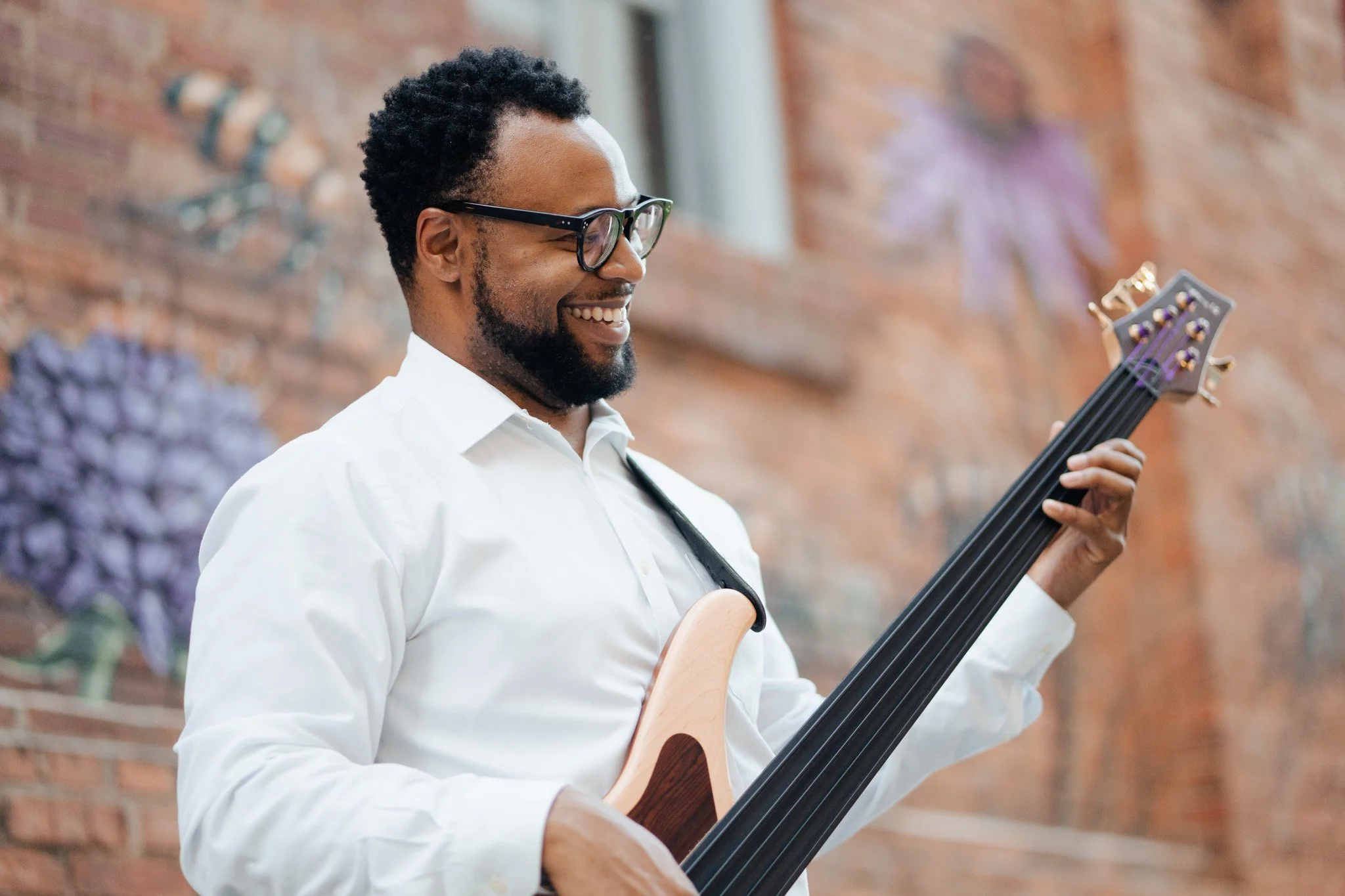
Gore had known some of these musicians for years before the band even had a name, bassist Dwayne Jordan for the better part of a decade, keyboardist Rony Thomas for three or four years, all of them circling the same handful of rooms, sitting in on each other's gigs, filling in wherever a working musician was needed. It was informal by design, the kind of scene where you build a reputation one sit-in at a time and call whoever is free when the phone rings.
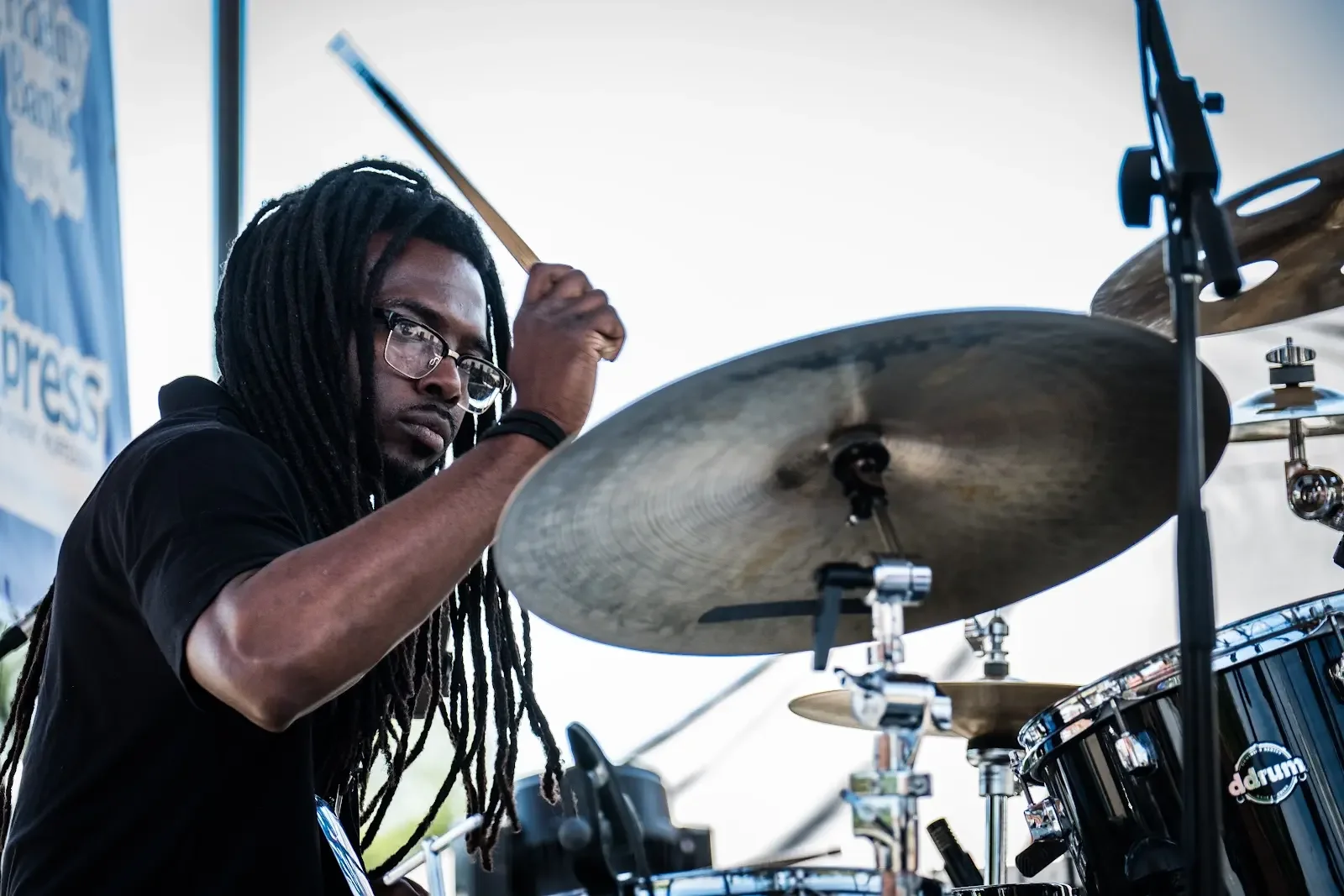
Somewhere along the way the rotation settled. The same names kept showing up, at saxophonist Imraan Khan's house sessions, at a Wednesday night spot in North Raleigh where Rony held down the piano chair and Thomas Owens played bass, at gig after gig where Gore found herself reaching for the same three or four players. Eventually it stopped feeling like a coincidence. "This guy, this guy, and this guy, we might have something," is how Gore describes the realization, the sense that a rotation of favors was quietly turning into a band. So she and Imraan Khan, Rony Thomas, Thomas Owens, and Dwayne Jordan decided to stop thinking of themselves as a loose collective of players who happened to like working together and start building something with a name, a sound, and a future.
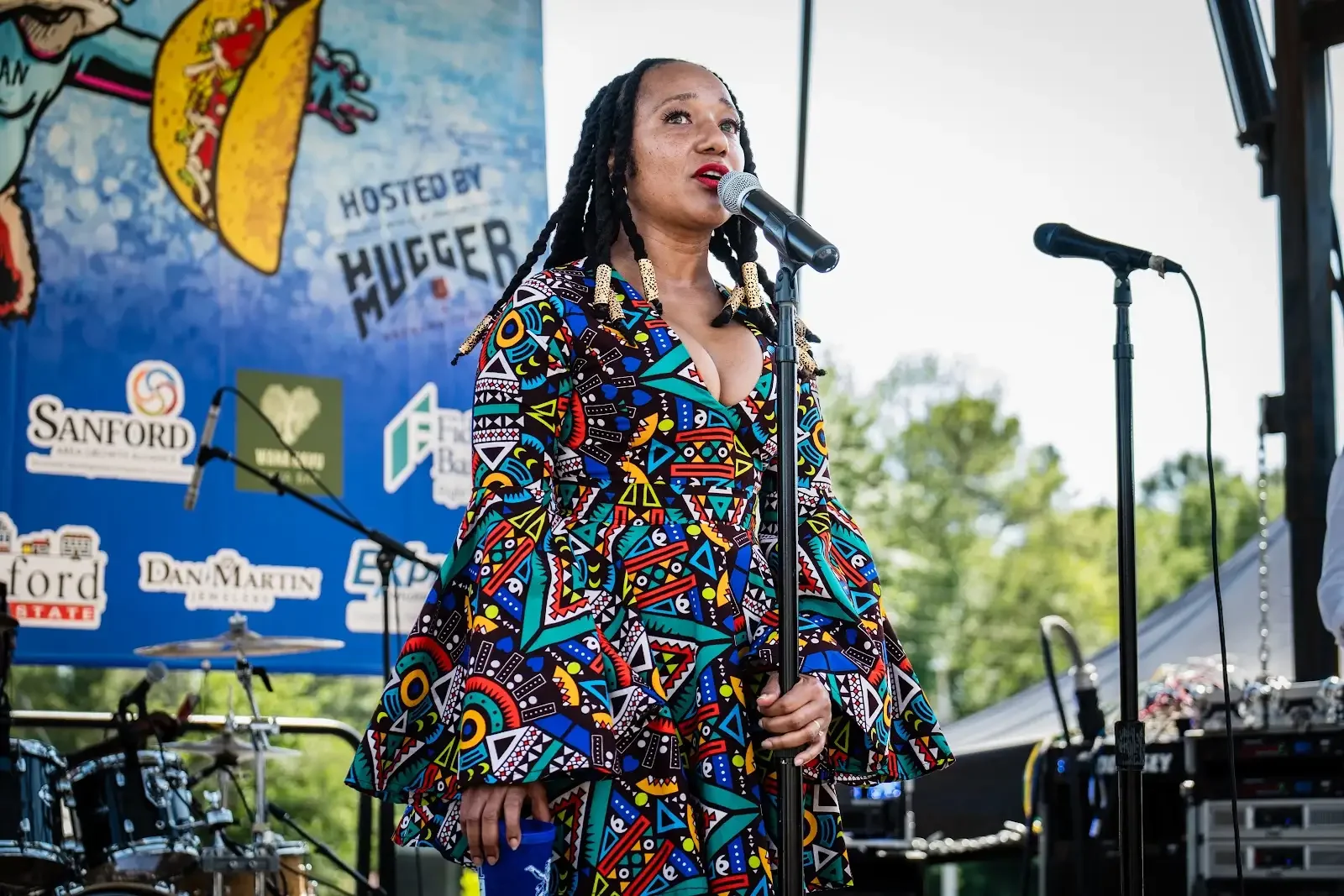
They named it “Kindred Roots”. The name was a nod to family, literal and chosen, and to the idea that everything the band plays, blues, gospel, jazz, soul, comes from the same ground. "We definitely try to present ourselves as a group," Gore says, even when the marketing calls for a lead name up front.
We caught up with Jo, Imraan, and Rony earlier this month. Thomas and Dwayne both worked day jobs that afternoon and were unable to join. What followed was less an interview than an afternoon spent inside the band's own easy rapport, the kind of conversation where somebody is always teasing somebody else about a wardrobe malfunction or a dance floor conquest, and every answer seems to circle back, sooner or later, to the same idea: that music, done right, is just another word for family.
That family took shape one player at a time. Imraan grew up on Long Island and was shaped by New York City's jam session scene rather than any conservatory. He still remembers being handed a trumpet in fifth grade band and going home with it, only for his mother to get on the phone with the school that same day. "No, you're a saxophone player," she told him, with no real explanation for how she knew. She was right and Imraan never studied the instrument formally. "Everything that I do, I learned from just being out in the jam sessions in New York City, or learning on the street," he says, "growing in my own right, working with lots of different groups across different genres."
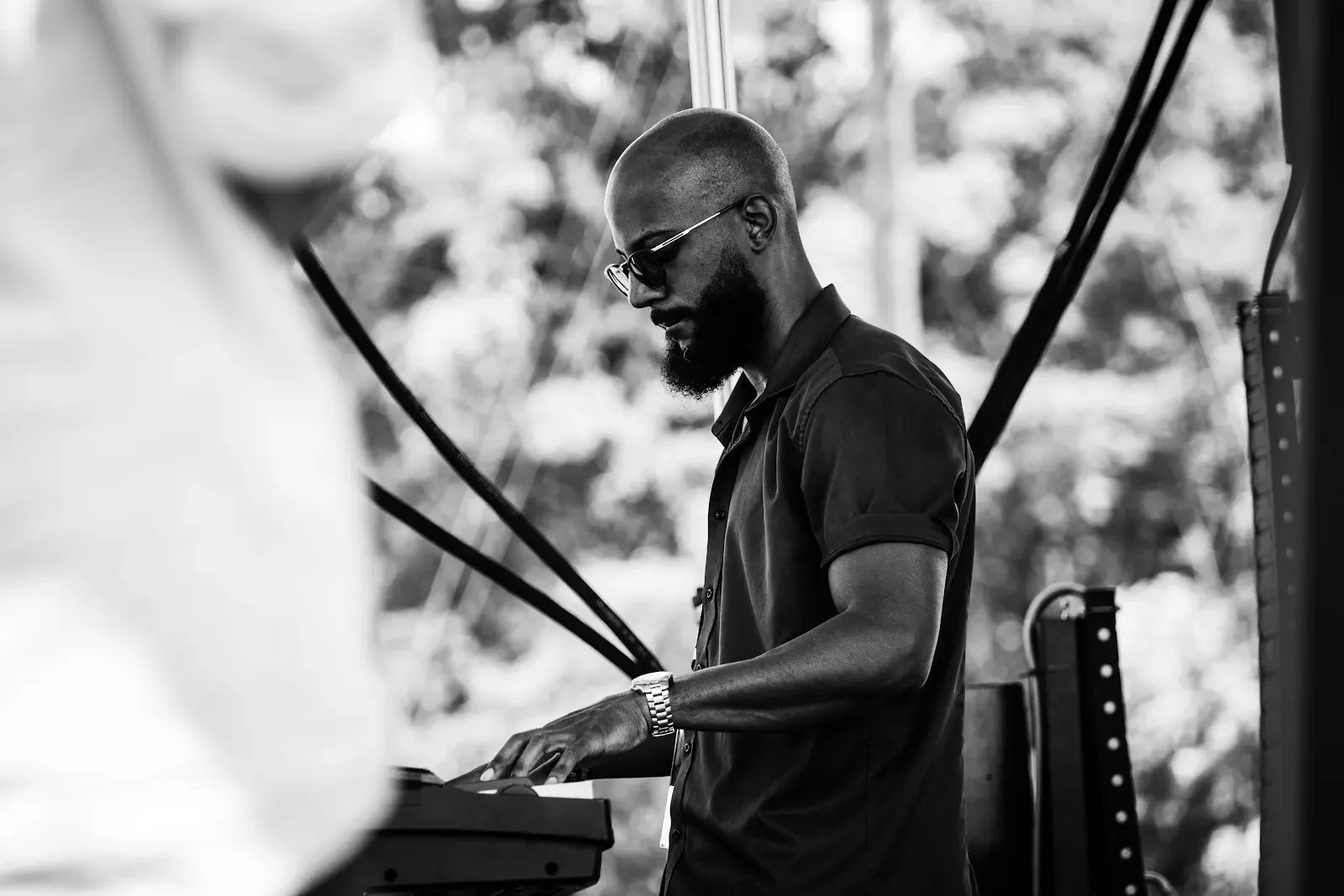
These days he hosts his own sessions at his house, complete with a newly acquired baby grand piano. It was at one of those sessions that he met keyboardist and arranger Rony, not long after Gore's own arrival in the area, and the chemistry was immediate enough that nobody had to discuss it aloud. Rony is originally from the Caribbean and still works in Brazil, and he brings his own set of roots to the table, the same African musical throughlines that shaped jazz on this side of the Atlantic. He is also, by unanimous band testimony, an exceptional dancer, a fact Gore and Imraan bring up with real delight. Imraan remembers warning Gore ahead of a night out that Rony was not going to sit down for the rest of the evening, because every woman in the room had already clocked him. "Was I right, Jo?" he asks. "Yes," Gore confirms, laughing. "He was right. It was hilarious."
Gore herself moved to Franklin County in April. When she found herself just outside of Franklinton, something about the pace felt familiar right away. "I like that it's quiet, so that way I have space and time to write," she says. "I love writing during the day." She decided this was just the place she needed to be.
Before she got to Franklin County, she grew up in the southeastern part of the state and her own musical education started at church. Her father played piano in the old Fats Domino style that fed straight into early Black gospel, the James Cleveland lineage, and he talked often about music's importance going back generations. Gore grew up on her grandfather's farmland, where services happened only two Sundays a month and the whole family turned out for them. Her father kept vinyl in the house and so did her grandparents. Later came the internet and with it Ray Charles and Nina Simone. "It's like, wow," she says of that discovery. "All of this is really the same. It's all kind of connected." She remembers being fairly young and singing, "and then I just kept doing it."
Ask Gore what music means to her, in the largest sense, and she takes a breath before answering. "It is beyond words sometimes," she says. She chases the feeling on stage, in a jam, in whatever combination of musicians happens to lock in together. "Maybe it's only five, ten seconds or a minute, but you have all tapped into something, and it just feels so good." Singing, she says, is a matter of the whole body: warm-ups done, water drunk, everything working the way it should. But the deeper draw is what the music lets her say. "We all love, we all have been angry, we've all cried, we've all had ambition, we've all been lazy, we all miss our grandma," she says. "To be able to use sound to speak to the human experience, I think, is the ultimate for me."
That sensibility carries over into her own solo material, which leans toward R&B and gospel and draws on the same well of church and community she grew up in. Her voice has been called “sanctified and sultry”, capable of stirring a room and then settling it back down. Her most recent single and video, "Hold You Like My Peace," is a tribute to caregivers, matriarchs, and the unsung that hold a community together. Themes of rest, love, and justice run through most of her writing. It is the same instinct that shapes her work with Kindred Roots, using a song to say something true about the people who raised her and the ones still doing that work now.
That conviction runs straight through how she talks about the band's sound too. Ask her what jazz means to her and she reaches for a tree. Roots music at the base, she says, branching upward through history with jazz sitting atop everything beneath it. "You can take a jazz player and put him in a bluegrass band, an R&B band, a rock band, a techno band, a hip hop band, a gospel band, anything that is American music, and you can take that jazz player and put him in all that stuff," she says. "You can't take a bluegrass player and put him in a jazz set. It's not going to happen." For Gore, that versatility is not just technique. It’s that inheritance, proof of what earlier generations built under conditions she still marvels at. "It is America's classical music," she says.
Asked where she sees the future, she laughs. "I'm Tina Turner," she says. "I want to tour. I want fifty million streams a month. I want all the things that will allow me to continue in music, and also purchase a home." Rony is angling for the band's first international dates, hoping to bring Kindred Roots to Brazil, where he already works. "I'm angling, getting us some work at some of the places that I normally work in Brazil," he says. "So we may take the band out to South America." This summer brought a well received set at Indie Fest in Sanford, which Imraan still counts among his favorites: "It was very professionally produced. I was, like, working at that level. That was a lot of fun.
When faced with the question of what they would tell a young musician starting out, the answers layer atop one another in harmony. Rony says "Always pay attention to the things that don't take talent”. "Being on time, how much you put in, energy." He counsels patience alongside diligence, because these things take time and he pushes back gently against the fear of failure. "Not trying is the biggest failure that they have." Imraan picks up a related thread, pushing against the idea of a single right way to learn the tradition. "It's okay to go against the grain," he says. "Everybody has to find their own individual, unique sound, and you're not gonna find that by following a pathway that somebody else laid down for you." Gore's answer runs a little differently and she is upfront about why. "I would actually tell women something different from men," she says. She agrees with Rony about not fearing failure, and she stresses the unglamorous half of the job, showing up prepared, communicating, having gear that works. But her sharpest advice is about something else entirely. "There have been people that have said this opportunity is attached to a different offer," she says. "Every single time you have to say no. Even if it's someone you do want, even if it's someone that you may find attractive, or even if you think that's gonna be fun, it is not. You still have to say no. Every single time. And that's hard." She circles back, too, to listening, not just to a favorite artist or two but to everything, all the time. "You will find your own voice," she says, "in addition to practicing and shedding yourself."
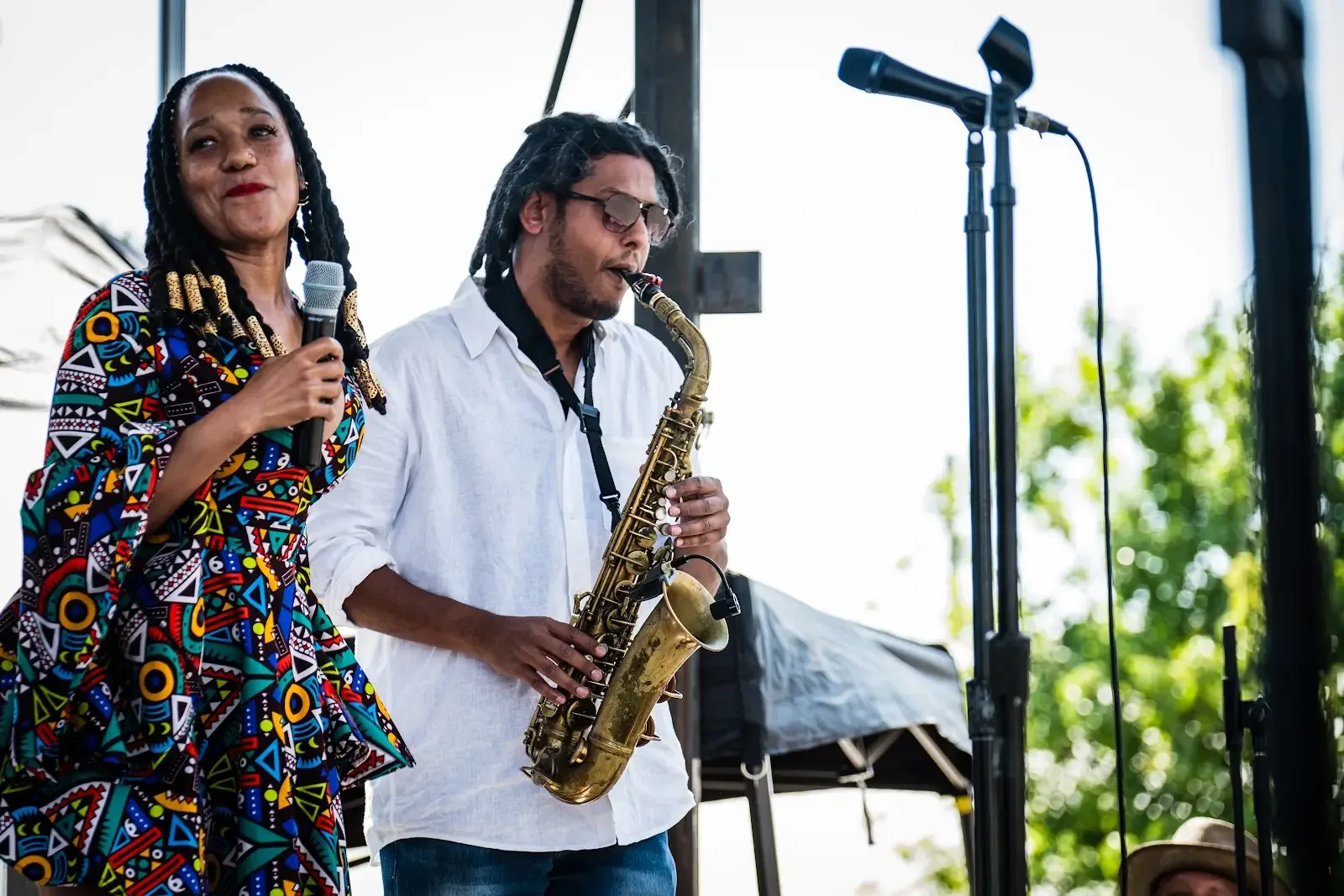
It is advice that doubles as a kind of thesis for Kindred Roots itself, a band built less on a single sound than on a willingness to keep listening to each other, across genres and generations, until something true comes out the other side. It is the same thing Gore keeps circling back to, the reason she picked up a phone and a chicken sandwich budget and turned a rotation of friends into a band in the first place. "It doesn't cost money," she says of playing music together, "and then you just want people to join into that." For now, that sharing is happening in Franklin County, in a quiet stretch of the state that Gore has come to think of as good for writing and good for thinking, close enough to the Triangle's jam sessions to keep the roots fed, far enough out to give the music room to grow.
Jo Gore and the Kindred Roots performed at Fox8 News in July and you can find their performance here. For more information about their band and how to book Kindred Roots, visit Jo’s website and follow them on both Facebook and Instagram
